Share:

Ninety years after the victory of the Long March, director Xu Zhanxiong told China.org.cn his historical epic "Crossing" aims to help younger audiences rediscover one of its key chapters.
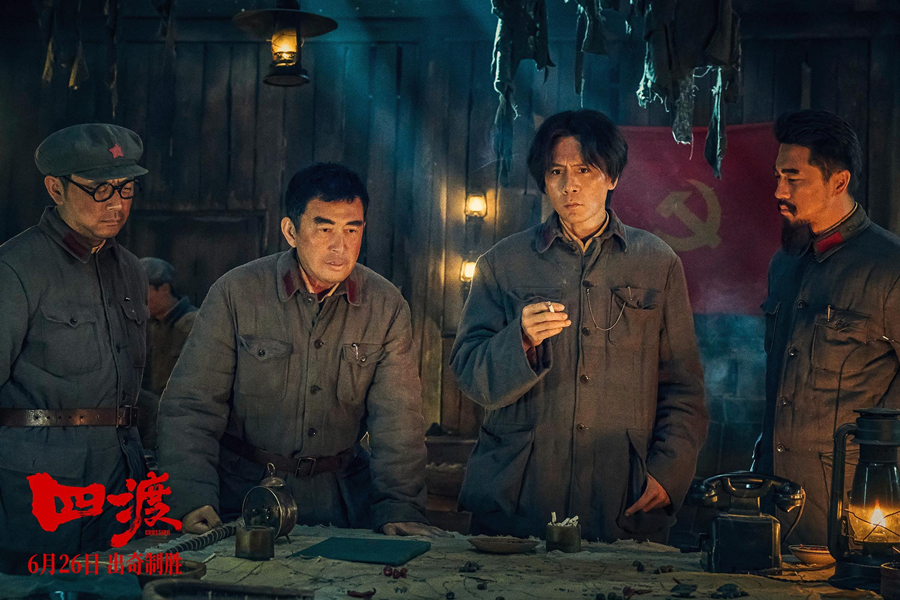
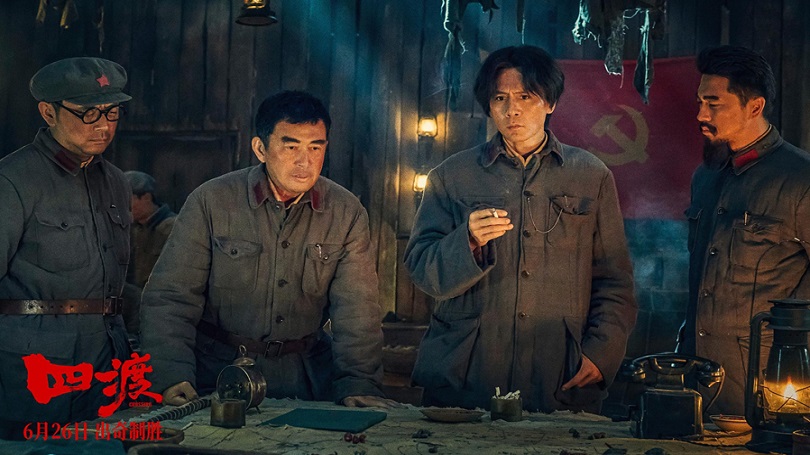
A still from "Crossing." [Photo courtesy of Bona Film Group]
Opening nationwide June 26, "Crossing" recreates the Battle of the Four Crossings of the Chishui River, the 1935 campaign widely regarded as Mao Zedong's proudest military achievement.
The battle was a major engagement between the Red Army led by the Communist Party of China and the Kuomintang forces during the Long March. The 30,000-strong Red Army was surrounded and pursued by 400,000 enemy troops, but broke through the encirclement by combining tactical maneuvering with unit cohesion.
"For a broader reason, this year marks the 90th anniversary of the victory of the Long March, and last year marked the 90th anniversary of the Zunyi Conference," Xu told China.org.cn. "I felt it was particularly necessary to present such a legendary story to today's younger generation."
The anniversary also comes more than four decades after a 1983 film about the same battle, making the new production both a tribute and a reinterpretation.
Rather than simply revisiting familiar events, the creative team focused on preserving the Long March spirit while reimagining how it's told.
"What we want to inherit is the wisdom, courage and perseverance embodied in the Long March spirit," he said. To achieve that, the filmmakers dropped the traditional omniscient narrative common in war films, borrowing suspense-cinema techniques for some sequences.
"Although everyone learns about the Four Crossings of the Chishui River in history class, most people don't know the details," Xu said. "Audiences today enjoy stories with suspense and unexpected twists, so we used that approach to retell this story."
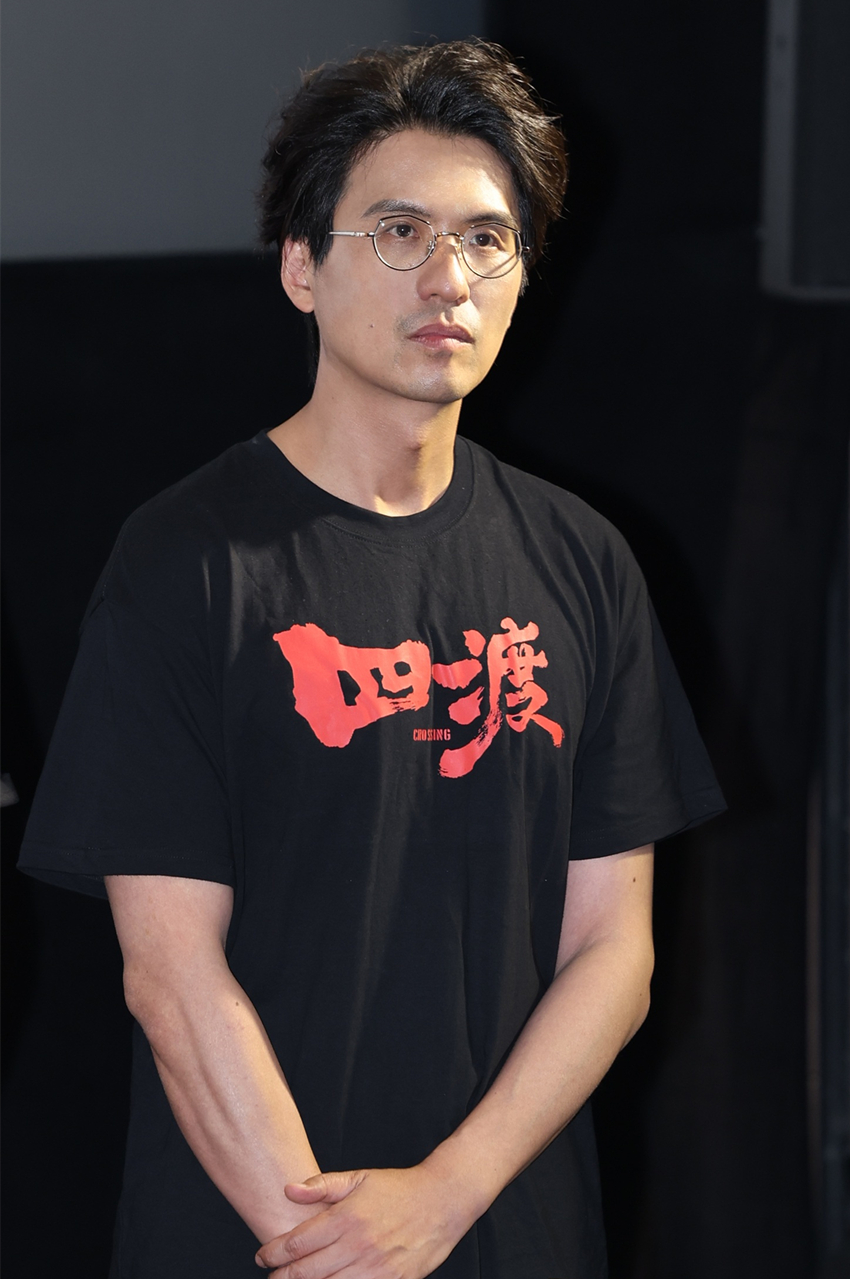
Director Xu Zhanxiong. [Photo courtesy of Bona Film Group]
To simplify complex military strategy, the filmmakers replaced commanders moving markers across maps with miniature sand tables filmed by pinhole cameras, putting viewers inside the terrain itself. In several sequences, Mao and Chiang Kai-shek appear to face each other directly, though the two commanders were separated by great distances.
Historical accuracy remained the foundation. Before filming, Xu and his team studied historical records, consulted scholars and retraced the entire route across Guizhou province. The journey left a deep impression, particularly his visit to the site of the Gouba Conference.
Xu said he was moved by the story of Mao walking alone with a lantern late at night, along what is now called the Mao Zedong Trail, to persuade Zhou Enlai after opposition arose to his strategy.
"That lonely figure walking along the country path in the middle of the night touched me the most," Xu said. "That was our starting point. We wanted to portray a Mao Zedong who was a real person with flesh and blood."That philosophy shaped the film's portrayal of every major historical figure.
Working with actor Liu Ye, who plays young Mao, Xu sought to present a leader who experienced uncertainty and self-doubt before leading the Red Army out of one of its darkest periods. Xu praised Liu's dedication, saying the actor lost 8.5 kilograms during production and endured a grueling filming schedule.
"He hardly ate throughout the production," Xu said. "But the spiritual light in his eyes can inspire every audience member."
Filmed on location in Guizhou province, the production followed the same January-to-April window the Red Army faced 90 years earlier. The cast and crew worked through rain, snow, strong winds and dense fog.
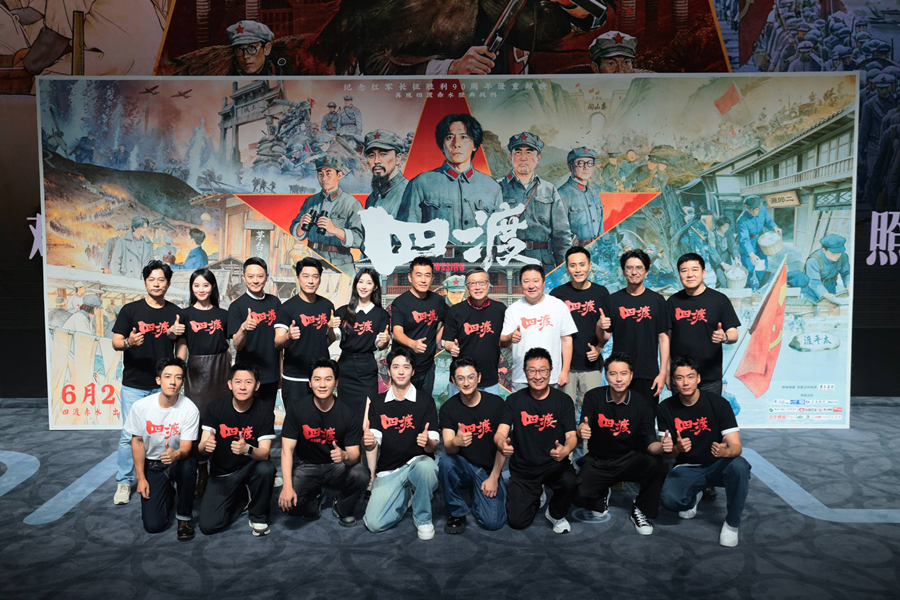
The cast and crewof "Crossing" pose for a photo at the premiere in Beijing, June 24, 2026. [Photo courtesy of Bona Film Group]
Xu singled out the hundreds of student extras who played Red Army soldiers. "They were extremely dedicated," he said. "Many of them suffered frozen feet or frostbite, but not one of them complained."
He cited the film's depiction of locally brewed liquor from Maotai Town as an example of that commitment to authenticity. It appears not as today's luxury product but as an ordinary local liquor Red Army soldiers used to disinfect wounds, stay warm and survive harsh wartime conditions."We have to return to the historical scene," the director said.
Revisiting the battle also reshaped Xu's understanding of the Long March.
"When you really come to this land and see how the battle was fought, you realize the sheer power that erupted from this revolutionary land is truly astonishing," he said.
Xu hopes "Crossing" will resonate beyond its historical setting. "I hope the film can provide modern audiences with the courage to move forward, as well as wisdom and boldness when facing challenges," he said.


 京公网安备
11010802027341号
京公网安备
11010802027341号