 Share:

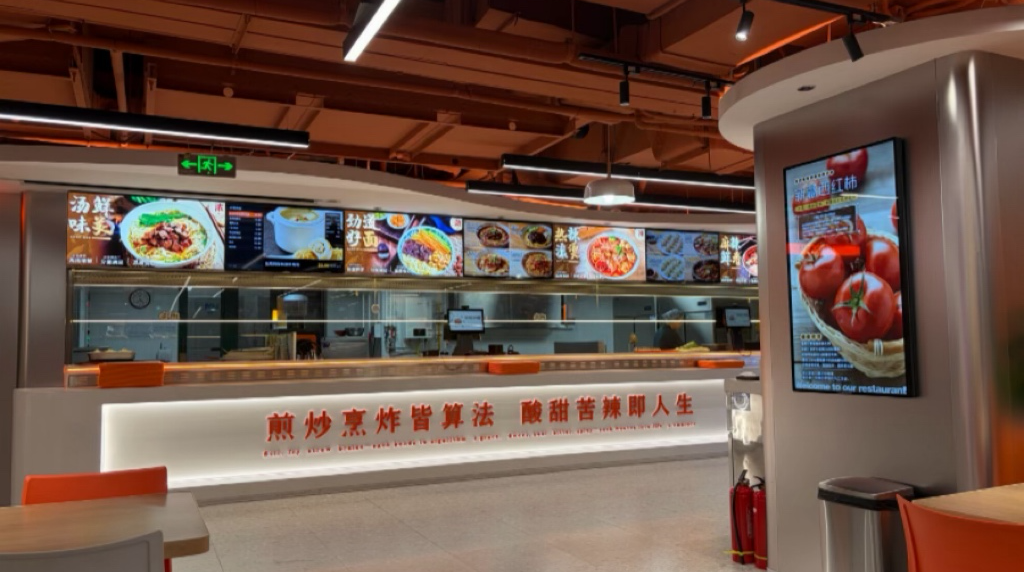
The AI Cooking Research Restaurant at Beijing's Haidian Canteen features full-process AI management covering ingredient preparation, cooking, portion weighing, meal pickup and even nutritional value calculation. It is here that smart cooking appliances and lab-certified nutritional data for dishes are both developed by an expert team from the College of Food Science and Nutritional Engineering, China Agricultural University.
According to Pan Qiang, the restaurant's manager, intelligent machinery has revamped conventional back-of-house operations. Fitted with automated stir-fry cookers, automated fruit and vegetable peelers and automated pastry and noodle makers, the kitchen equipment covers core cooking methods from steaming, boiling, roasting, deep-frying to stir-frying. As of today, it is capable of producing roughly 70 to 80 types of pastries as well as an array of home-style Chinese dishes.
Professional chefs set the cooking temperature parameters, the ingredient ratios and cooking durations before programming these settings into the automated devices. This will guarantee consistent taste and portion specifications across all menu items being offered. Where this diverges from traditional cooking is for the same volume of meals, a normal kitchen would need more than ten chefs spending the entire morning to prepare. This AI-powered venue requires just one head chef plus two assistants to serve 500 diners within an hour.
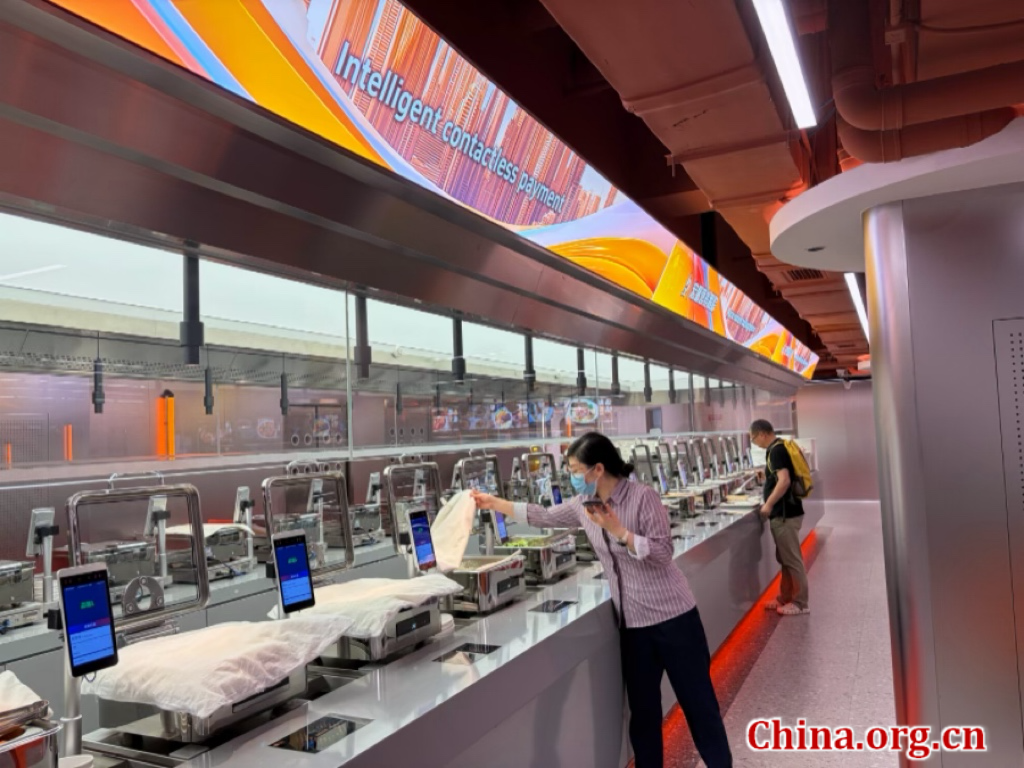
A photo taken on June 2, 2026 shows the food pickup counter at the AI Cooking Research Restaurant of Haidian Dining Hall in Beijing. [Photo by Yang Chuanli/China.org.cn]
What also becomes clear is that data-backed smart operations dramatically cut food waste, not only simplifying back-kitchen management. Pan explained the pay-by-weight, on-demand serving model prompts customers to take appropriately sized portions. This results in diners actually finishing their meals, which has reduced kitchen food waste by more than 90% when compared to traditional dining facilities.
A real-time digital dashboard in the back kitchen monitors dish sales, raw material usage, inventory reminders, customer footfall and diners' nutritional intake data. This provides more data for further improvements. By continually gathering more operational statistics, the management can adjust food procurement and menu planning to be even better.
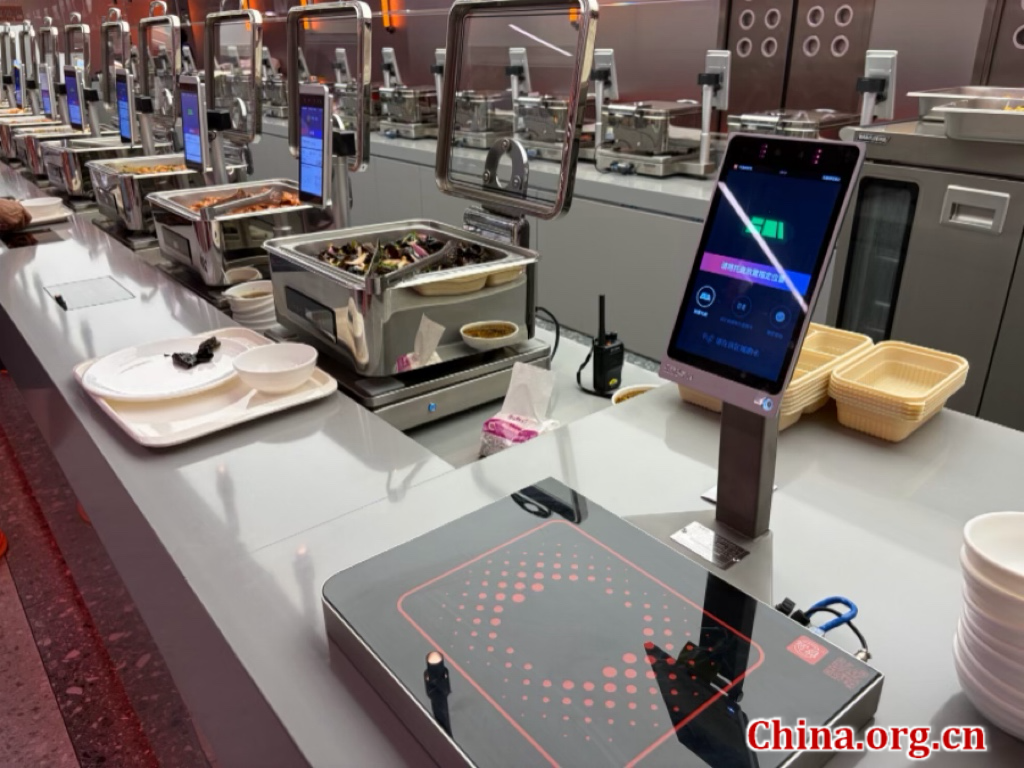
A photo taken on June 2, 2026 shows the food pickup counter at the AI Cooking Research Restaurant of Haidian Dining Hall in Beijing. [Photo by Yang Chuanli/China.org.cn]
The canteen also offers visualized nutritional dining. Each dining plate is embedded with a smart chip, so once diners place selected foods on the plate at the counter, the terminal screen instantly displays dish weight, unit price and key nutritional metrics. This includes the calories, protein, fat, carbohydrates and sodium. All nutritional figures are tested and confirmed in the professional labs of the partnering research team. To date, nutritional standardization archives have been finalized for 500 dishes, with a year-end target to expand the standardized recipe repository to 1,000 entries.
Professor Hu Xiaosong with the College of Food Science and Nutritional Engineering, China Agricultural University, noted the project team will further upgrade core technologies. Upcoming targeted nutrition research will center on dietary solutions to improve adolescent eyesight, ease sleeping disorders and cater to diners living with hypertension, hyperglycemia and hyperlipidemia, embedding targeted functional nutrition into regular daily catering.
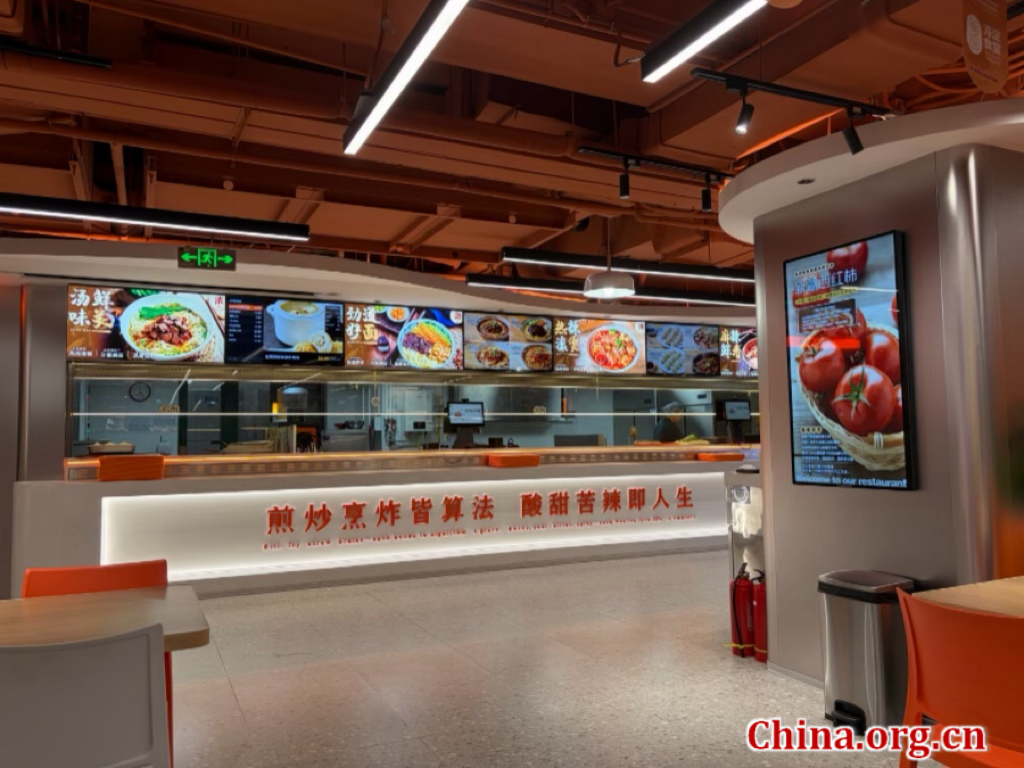
A photo taken on June 2, 2026 shows the snack stall at the AI Cooking Research Restaurant of Haidian Dining Hall in Beijing. [Photo by Yang Chuanli/China.org.cn]
Launched on Dec. 22 last year, the venue has been serving around 500 people each day.


 京公网安备
11010802027341号
京公网安备
11010802027341号