Share:

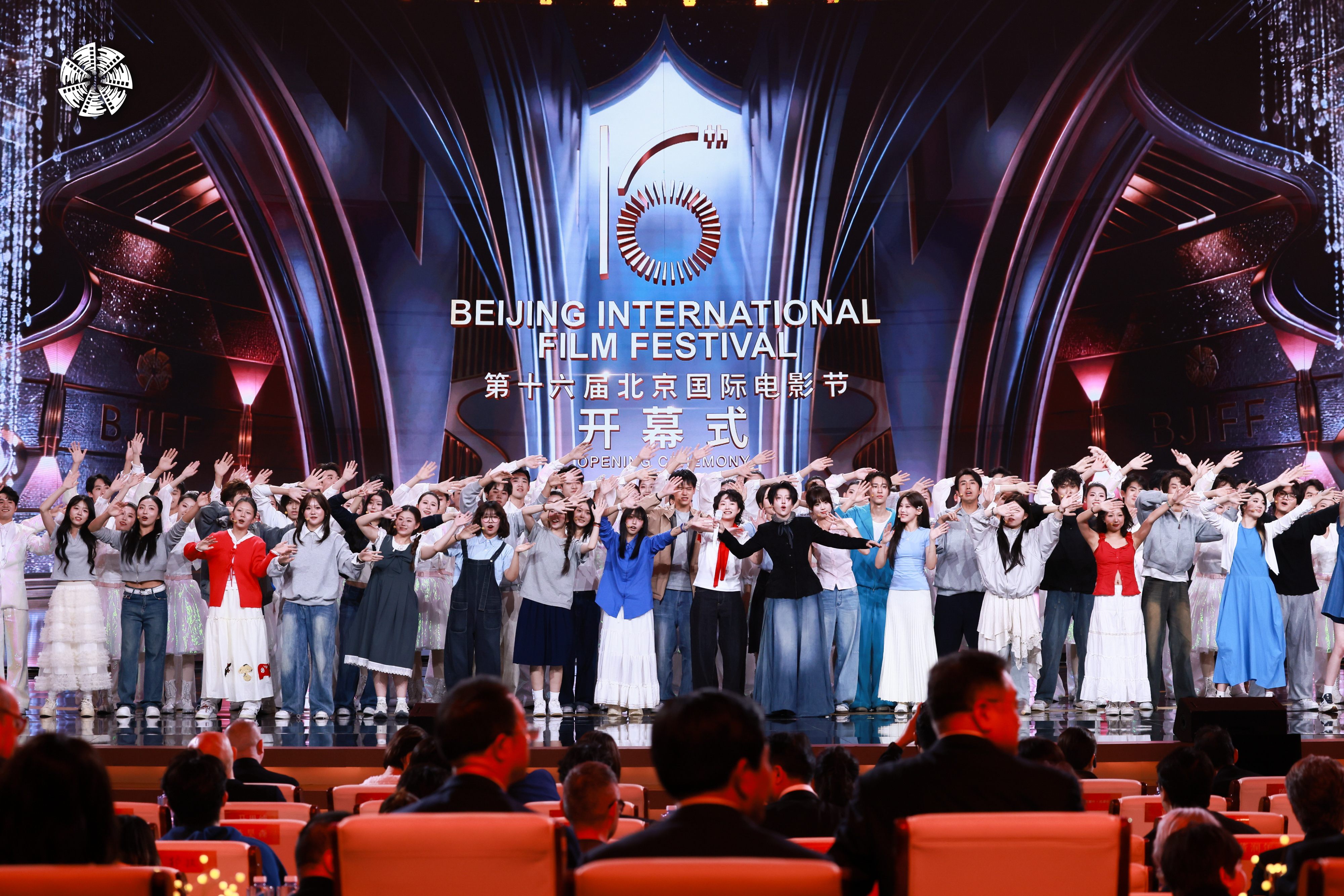
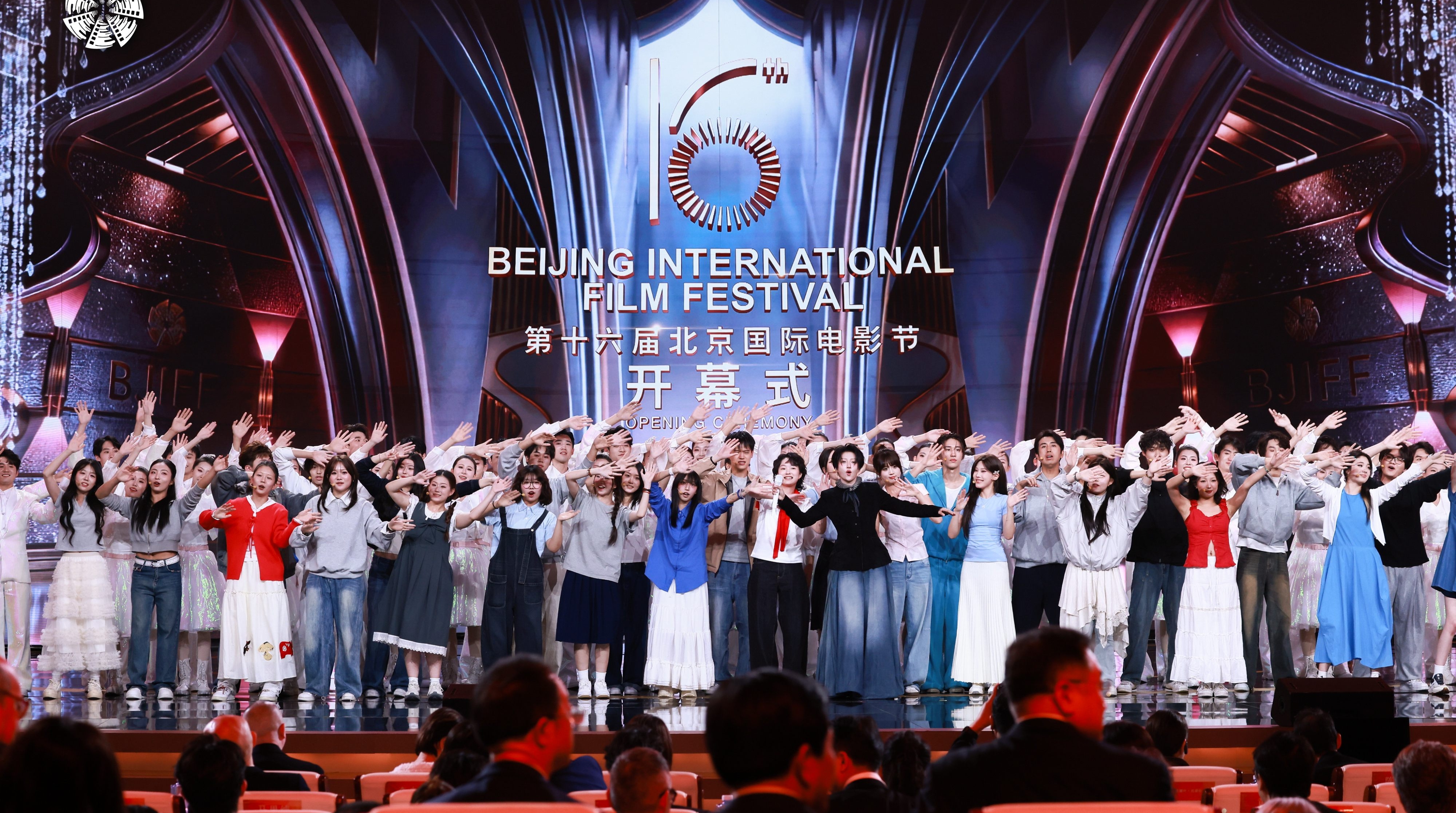
The 16th Beijing International Film Festival (BJIFF) opens in Beijing, April 16, 2026. [Photo courtesy of the BJIFF Organizing Committee]
International filmmakers, actors and industry professionals gathered Thursday evening at Beijing’s Yanqi Lake International Convention & Exhibition Center for the opening of the 16th Beijing International Film Festival (BJIFF), an event that for the first time places the city on the calendar for both the BJIFF and the Hundred Flowers Awards in a single year.
Yu Junsheng, vice president of China Media Group and vice chairman of the 16th BJIFF organizing committee, said the convergence of the two events reflects Beijing's growing cultural vitality and the broader momentum of China's film industry.
The festival, which runs through April 25, features more than 500 events across 12 core sections. A record 1,826 feature films from 139 countries and regions have been submitted for the Tiantan Award competition, with international entries accounting for 88% of the total.
Sun Junmin, member of the Standing Committee of the Communist Party of China (CPC) Beijing Municipal Committee and head of the Publicity Department of the CPC Beijing Municipal Committee, described the BJIFF as a major platform for showcasing Chinese cinema and facilitating exchanges between Chinese and international filmmakers. The program, she added, is designed with an international outlook, a Chinese character, and a distinctly Beijing style. Core events—including industry forums, project pitches, and screenings—aim to address emerging trends and build consensus within the global film community.
Sun also outlined the festival's role in fostering international cultural exchange. She cited a series of Sino-French cinematic dialogues and overseas promotional events, describing them as efforts to use film as a bridge. "Through films as the medium, we will tell the stories of China and the stories of Beijing well," Sun said.
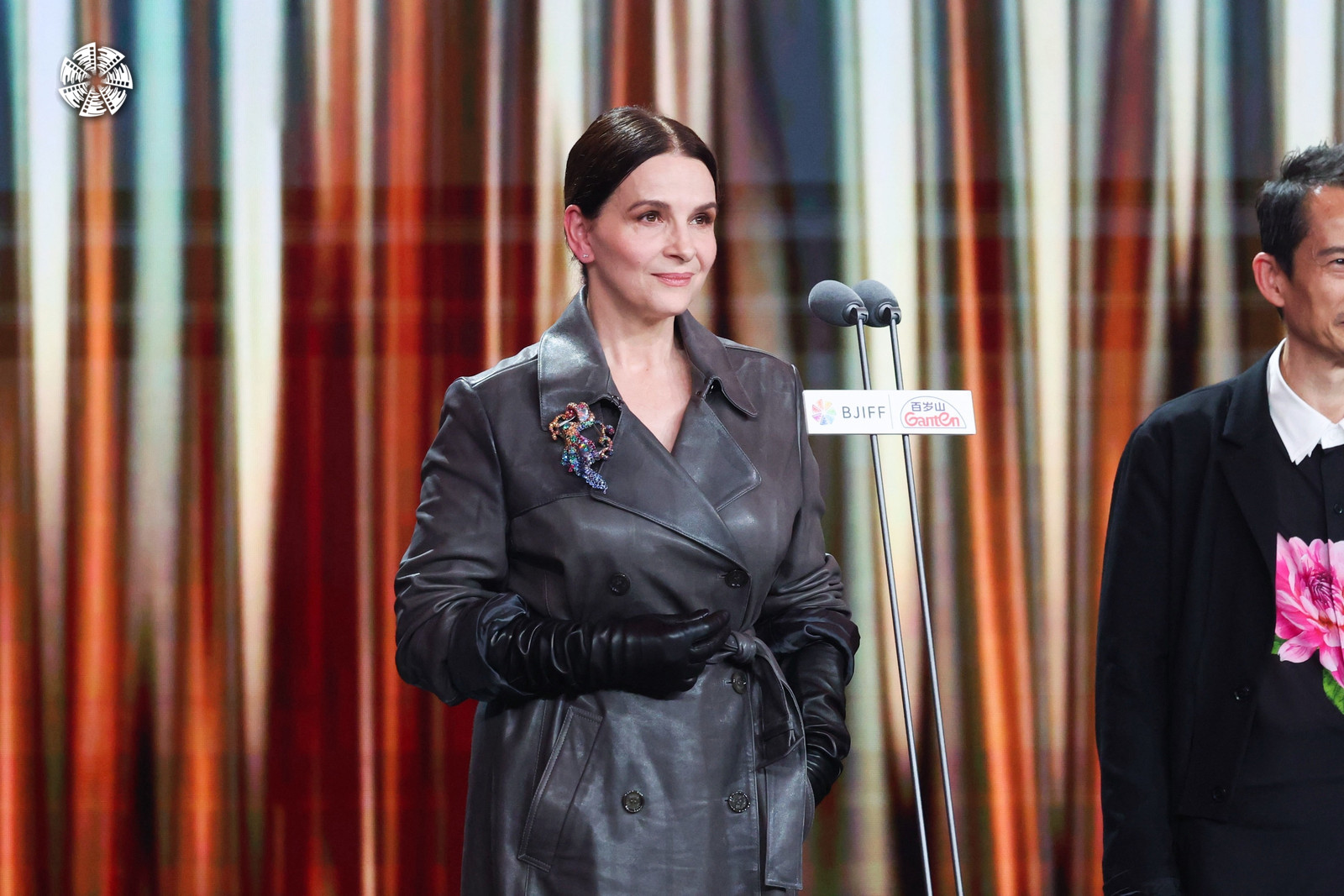
French actress Juliette Binoche, jury president of the 16th Tiantan Award, speaks at the 16th Beijing International Film Festival (BJIFF) opening ceremony in Beijing, April 16, 2026. [Photo courtesy of BJIFF Organizing Committee]
The emphasis on cultural exchange was echoed moments later when Juliette Binoche, the acclaimed French actress serving as jury president of the Tiantan Award, took the stage. In her remarks, Binoche recalled the 1958 film "The Magic of the Kite," the first co-production between China and France. She noted that the story follows a French brother and sister who were drawn to Beijing by a kite and found friendship at the Temple of Heaven, or Tiantan. She added that she has since regarded Tiantan as a symbol of friendship.
Chinese director Bi Gan, a member of this year's jury, whose film "Resurrection" received the Special Award from Binoche at the 78th Cannes Film Festival last year, remarked on the coincidence of reuniting with her in Beijing. He described the moment as a fitting chapter in their shared journey through film. The exchange underscored a recurring theme of the evening: cinema as a medium that transcends borders.
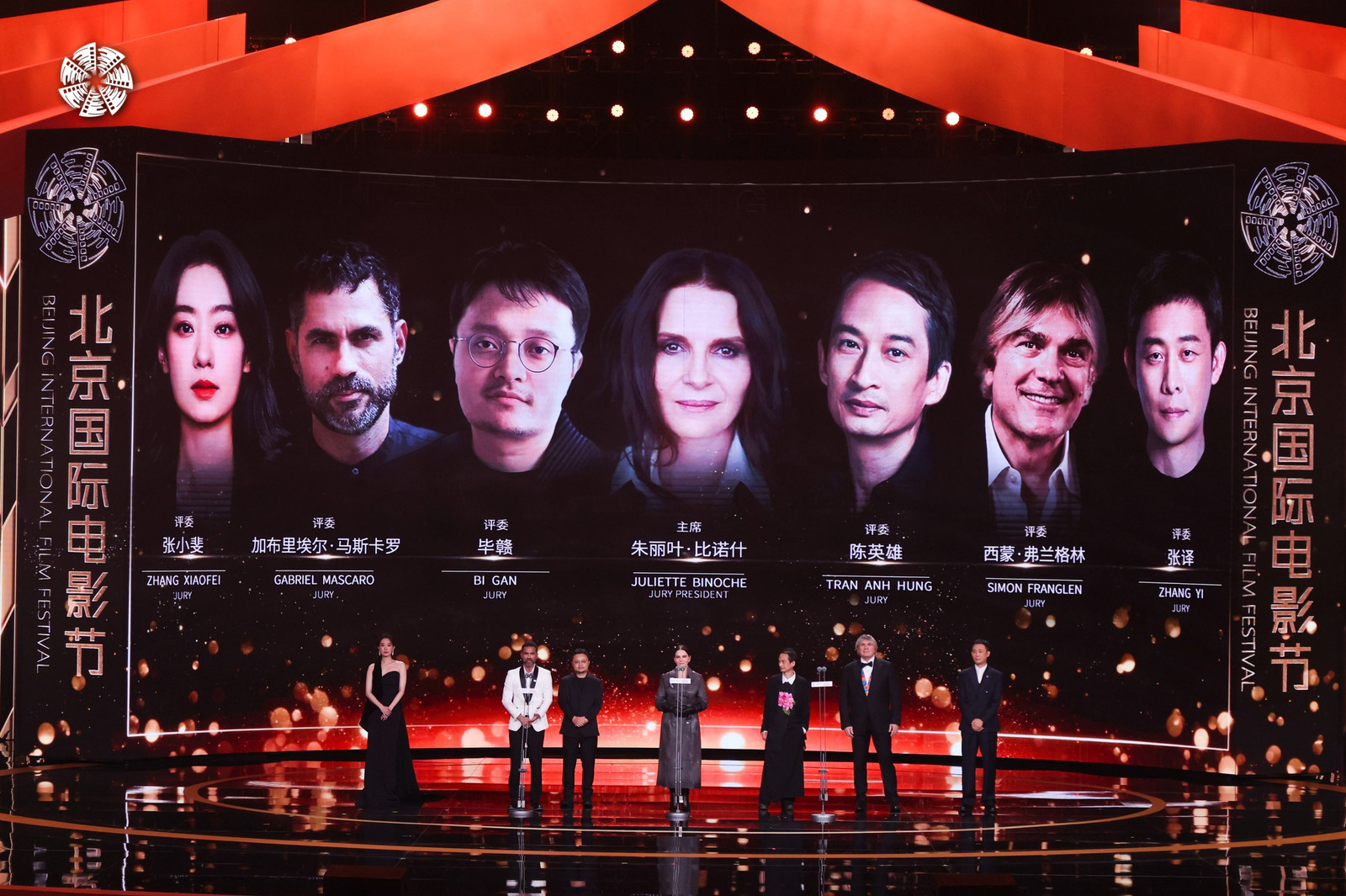
The Tiantan Award jury appears on stage during the opening ceremony of the 16th Beijing International Film Festival (BJIFF) in Beijing, April 16, 2026. [Photo courtesy of BJIFF Organizing Committee]
This year's jury panel also includes Vietnamese-French director Tran Anh Hung, Brazilian director Gabriel Mascaro, British composer and music producer Simon Franglen, and Chinese actor Zhang Yi and actress Zhang Xiaofei.
The jury will decide winners across 10 categories, including best feature film, best director and best screenplay. All awards will be presented at the festival's closing ceremony on April 25.
This year's festival has placed emphasis on the intersection of filmmaking and technology. Organizers have integrated artificial intelligence (AI) and virtual production across the program, including AI film competitions and AIGC project pitching sessions.
Sun Junmin detailed the city's commitment to technological advancement in the film sector. She said Beijing will strengthen research and application of new film technologies, support the development of virtual reality filmmaking, and back the construction of high-tech soundstages. "We want to push for deep integration between frontier technology and the film industry," Sun said.
Beyond production infrastructure, she stressed the importance of weaving cinema into daily urban life. The city, she noted, has organized subsidized public screenings and cultural consumption initiatives designed to make film a visible and accessible part of Beijing's identity.
The festival's screening program is its largest to date, offering more than 260 domestic and international titles in the Beijing-Tianjin-Hebei region, with approximately 800 screenings scheduled. Government subsidies have helped keep ticket prices affordable, part of a broader effort to encourage public participation.


 京公网安备
11010802027341号
京公网安备
11010802027341号