


 Share:

Han Han's "Pegasus 3" is the biggest winner of the lucrative Spring Festival film season, solidifying its place in Chinese cinematic history. The creators of the film said they aim to deliver fresh excitement beyond the racing film formula.
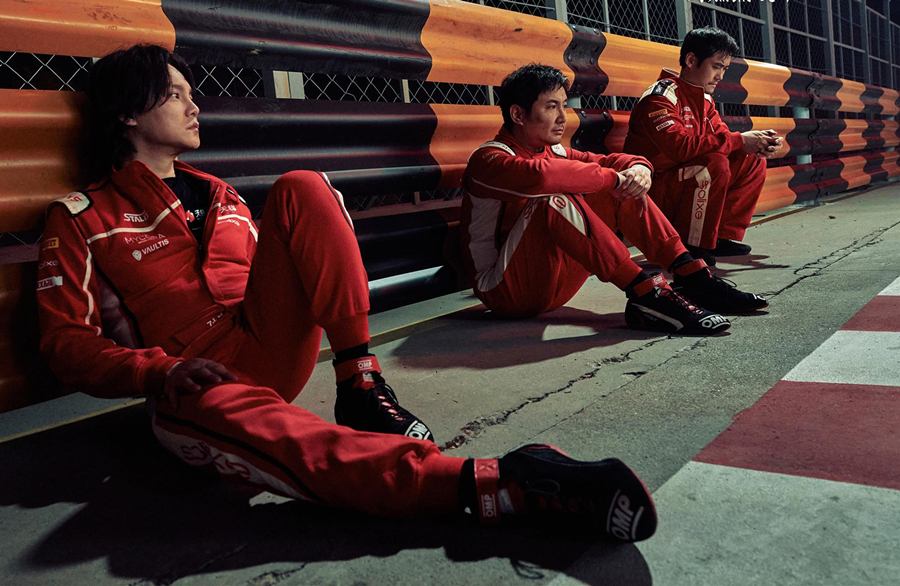
A still from "Pegasus 3." [Photo courtesy of Shanghai PMF Pictures]
"For the third installment, we have maps with higher difficulty and greater complexity, more intense competition, and a deeper exploration of human nature and complex inner worlds. We also have a stronger cast," director Han said.
Audiences have responded enthusiastically. As of Sunday, the film has already grossed 3.76 billion yuan since its Chinese New Year release.
The third chapter launches an entirely new story arc, welcoming both longtime fans and first-time viewers into a higher-stakes, higher-altitude and more fiercely competitive arena, that being the Muchen 100 Rally on Muchen Mountain. Sitting at an elevation of around 4,650 meters, it has been coined the "toughest intercontinental race" and the "world's highest-altitude rally."
Zhang Chi, the reigning "King of Bayanbulak" played by comedian Shen Teng, returns to the track, aiming not only for victory, but to achieve something beyond the competition itself. The film features Asia's top rally teams from 10 countries.
Shen said he had imagined there might be a third film, but never expected Han Han to take it this way. Both the racing sequences and the storytelling continue to reach new heights, and it's rare for a franchise to keep surpassing itself like this, he noted.
Han, hinting at the fourth installment, expressed gratitude to the cast for their chemistry, rapport and outstanding performances, which allowed the story and characters to "increasingly develop naturally."
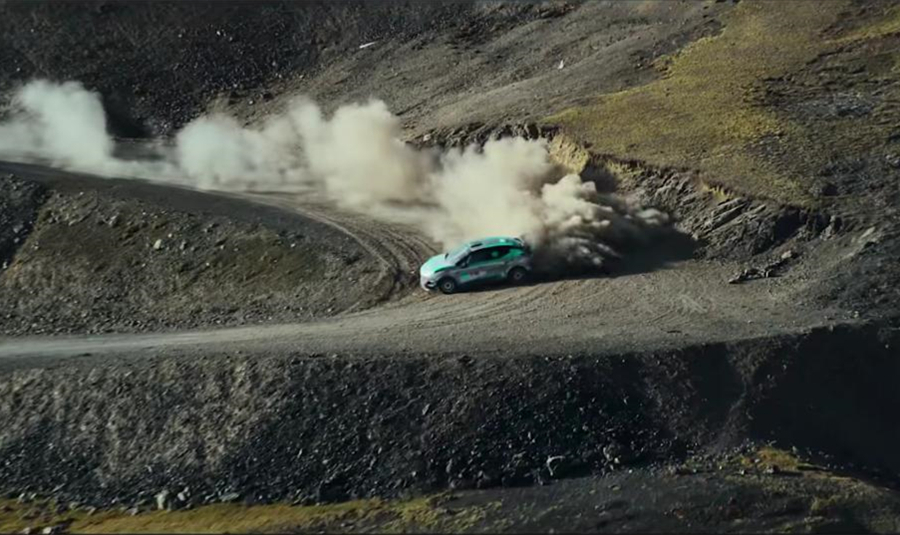
A still from "Pegasus 3." [Photo courtesy of Shanghai PMF Pictures]
Li Wenwen, chief producer of the film, said that by the time the "Pegasus" franchise reached its third installment, the team still aimed to challenge themselves to create something completely different from the first two films. They went onto deliver "a level of visual and auditory spectacle never seen before."
According to the producer, the production used several new pieces of filming equipment. For example, drones that reached 209 km/h with a tailwind to keep pace with the cars. Electromagnetic rails on the vehicles enabling varied angles, and upgraded gimbals delivering sharper images with continuous zoom at 50 meters. All of this comes together to give audiences a more authentic experience.
Han Han said the visuals are more refined and thrilling compared to the second film. In addition, the competition is elevated. In previous films, they shot in Bayanbulak, Xinjiang Uygur Autonomous Region. This time, they went to stunning natural landscapes in Delingha, western Sichuan province, and to higher altitudes — averaging more than 4,500 meters above sea level — which pose more challenges to the crew and the cars. From mountains to snow-capped peaks to forests and then to the Gobi Desert, the entire track setting is much more diverse.
Producer Li Wenwen said this year, they hope audiences can feel that over these seven years, "Zhang Chi, like all of us, has experienced ups and downs, poetic moments, and even more so, exhilaration and growth. So I also hope this film can help everyone thrive in life and move full speed ahead."
"When I made the first film, I really never thought there would be a chance to make a third one seven years later," the director said, adding there was a lot of nostalgia and friendship during the process.

Cast and crew pose for a photo at the premiere of "Pegasus 3" in Beijing, Feb. 17, 2026. [Photo courtesy of Askwin]
Han, a popular writer-turned-car-racer-turned-film-director, has had a passion for cars his entire life, and all the films he has made carry a connection to cars. The series of "Pegasus" films was his way of filling a void in the Chinese racing film genre.


 京公网安备
11010802027341号
京公网安备
11010802027341号