 Share:

As part of his Spring Festival routine, Zhao Congzhuo has been busy at his workshop in Liaoning province, cutting intricate images of horses from red paper in the tradition of Manchu Irgen Gioro paper-cutting.
In recent weeks, Zhao has presented his works at exhibitions and cultural events nationwide while preparing a new series themed around the Year of the Horse.
Zhao, 33, is a 12th-generation inheritor of Manchu Irgen Gioro paper-cutting, a traditional craft originating in Gaizhou city, Liaoning, and recognized as a provincial-level time-honored brand.
"This year, we have created several new works centered on the Year of the Horse," Zhao told China.org.cn. "In Manchu paper-cutting, the horse is an auspicious symbol. It represents forward momentum and family well-being, and also reflects the sense of smoothness and abundance rooted in our nomadic heritage, which naturally resonates with people's hopes for the Spring Festival."
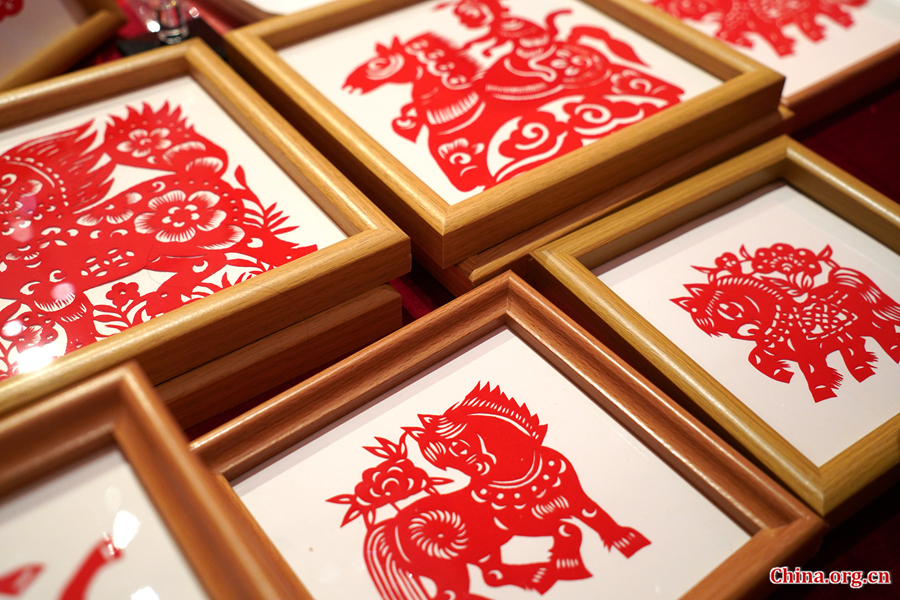
Photo taken on Jan. 21, 2026, shows a collection of paper-cuts designed by Zhao Congzhuo for the Year of the Horse. [Photo by Wang Yiming/China.org.cn]
Zhao's creations continue a family craft that began in 1687 while embracing modern aesthetics. His Year of the Horse works preserve classic Manchu patterns like serrated and crescent motifs and use nine traditional techniques, including cutting, carving, layering and dyeing. However, he also creates cleaner, less cluttered designs and adds festive elements like auspicious clouds, the Chinese character "fu" (good fortune) and lanterns.
"We want the designs to better align with today's preference for simplicity," Zhao said, adding that the works are meant to convey New Year wishes such as "vitality and perseverance" and "a promising future."
As a child, Zhao spent hours in his grandfather's workshop, watching the older man's scissors dance across red paper.
"Intangible cultural heritage should not be kept behind glass; it has to remain part of everyday life," Zhao said.
While studying at Shenyang Vocational and Technical College in 2012, Zhao founded a campus paper-cutting club to introduce traditional Manchu paper-cutting to younger audiences. To preserve techniques at risk of being lost, he spent three years cataloging more than 900 paper-cut patterns from his family's archives dating back to the Ming (1368-1644) and Qing (1644-1911) dynasties.
Zhao and his team have also tackled technical challenges. To prevent colors from fading, they developed special paper made from bark fiber and silk and paired it with low-carbon, UV-resistant dyes. He has also worked with universities to explore digital tools, including augmented reality apps, to bring traditional patterns to modern audiences.
The craft is finding success in the global market. Zhao has showcased Manchu paper-cutting at exhibitions such as the China International Import Expo and secured orders from French companies. His works are now listed by the Ministry of Agriculture and Rural Affairs as official diplomatic gifts.
Spring Festival remains Zhao's busiest season. This year, his workshop has scheduled more than 40 events in communities and schools.
"Face-to-face interaction is especially meaningful," Zhao said, reflecting on a recent exhibition at the Chinese Traditional Culture Museum. He recalled how his booth was constantly crowded, with six practitioners teaching and selling all day until they were exhausted.
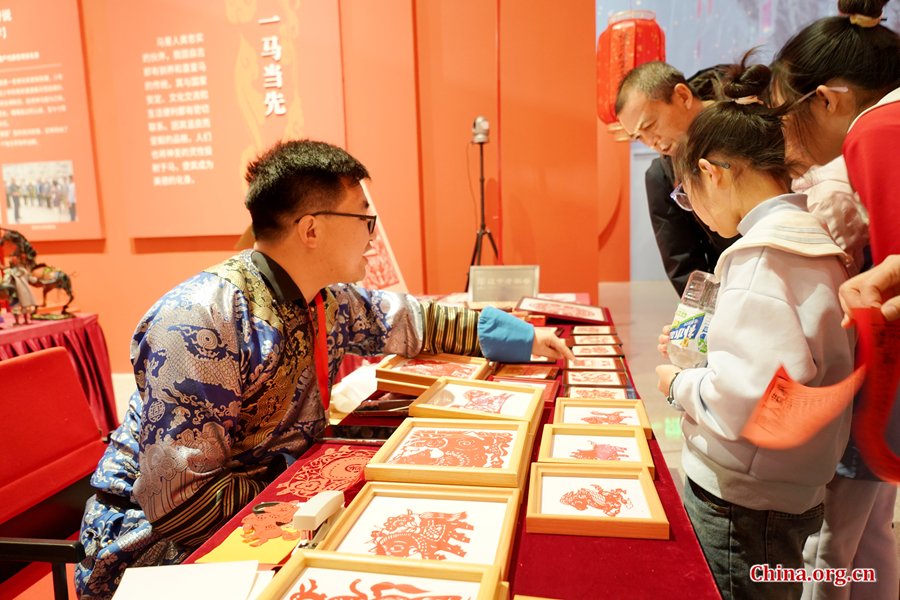
Zhao Congzhuo (L) explains the cultural significance and techniques of Manchu Irgen Gioro paper-cutting to visitors at the Chinese Traditional Culture Museum in Beijing, Jan. 21, 2026. [Photo by Wang Yiming/China.org.cn]
"The satisfaction of promoting my hometown and helping more people discover Manchu Irgen Gioro paper-cutting makes it all worthwhile," he said. "When you see children lining up to participate with such enthusiasm, you realize the value of these exchanges. They help intangible heritage blend into everyday life during the Spring Festival and ensure that traditional skills are passed on through interaction and affection."
Looking ahead to the Year of the Horse, Zhao sees parallels between the zodiac's symbolism and his plans for the craft.
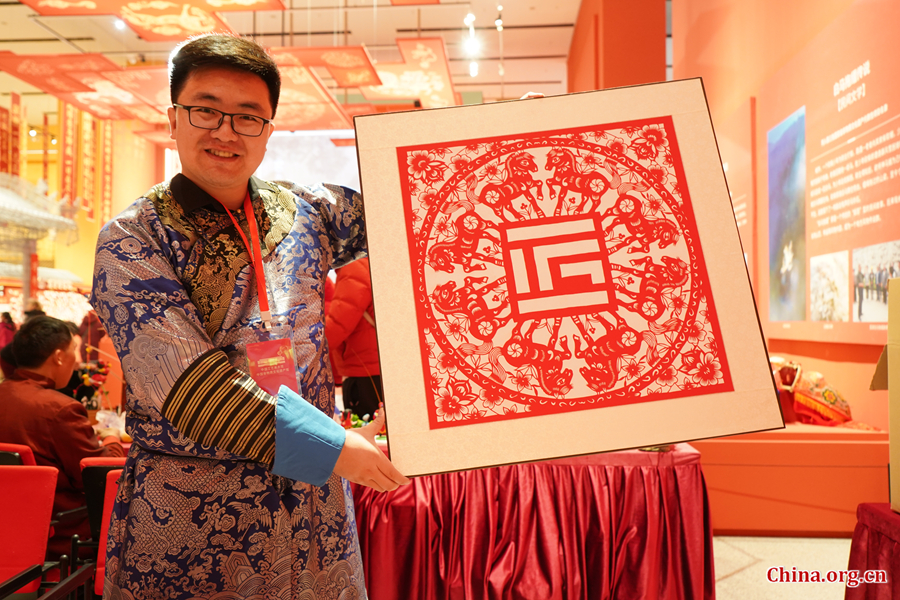
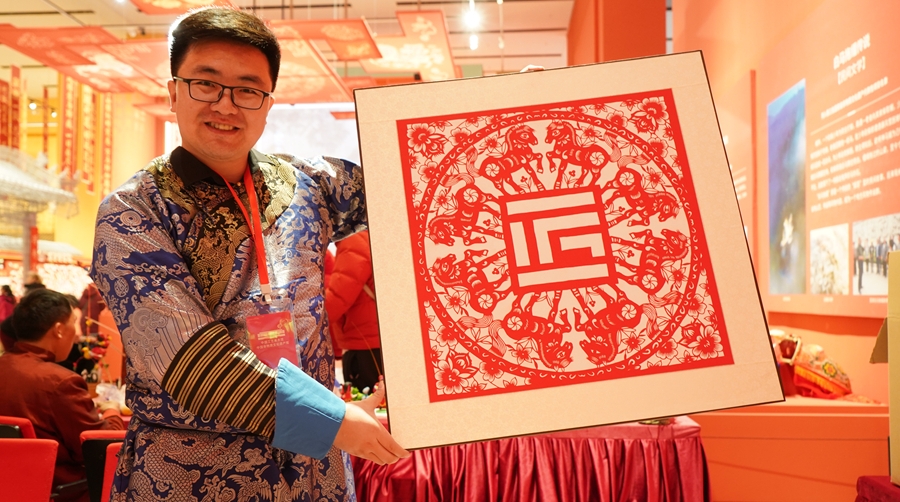
Zhao Congzhuo poses with a large-scale paper-cutting work designed for the Year of the Horse during an exhibition at the Chinese Traditional Culture Museum in Beijing, Jan. 21, 2026. [Photo by Wang Yiming/China.org.cn]
"The Year of the Horse carries the idea of pressing forward with determination and going the distance," he said. "In the coming year, my core hope is to help Gaizhou Manchu Irgen Gioro paper-cutting move more steadily and further."
By "steadily," Zhao refers to building stronger local roots. He said he wants to keep blending tradition with innovation, creating works that fit modern life while preserving their cultural foundations. He also plans to expand hands-on programs in villages, schools and communities to attract more enthusiasts, especially young people.
Going "further," he added, means bringing the craft to a wider audience. Zhao hopes to use paper-cutting to boost culture and tourism in his hometown of Gaizhou, making the art form a cultural trademark for the region.


 京公网安备
11010802027341号
京公网安备
11010802027341号