Share:

Editor's note: The National Art Museum of China is marking the start of the year with a series of exhibitions ranging from traditional handicrafts to technology-driven art, aiming to showcase a culturally prosperous China.
Established in 1958, the museum features buildings modeled after ancient architectural styles. It spans 21 exhibition halls covering 6,660 square meters dedicated to showcasing both traditional culture and contemporary art.
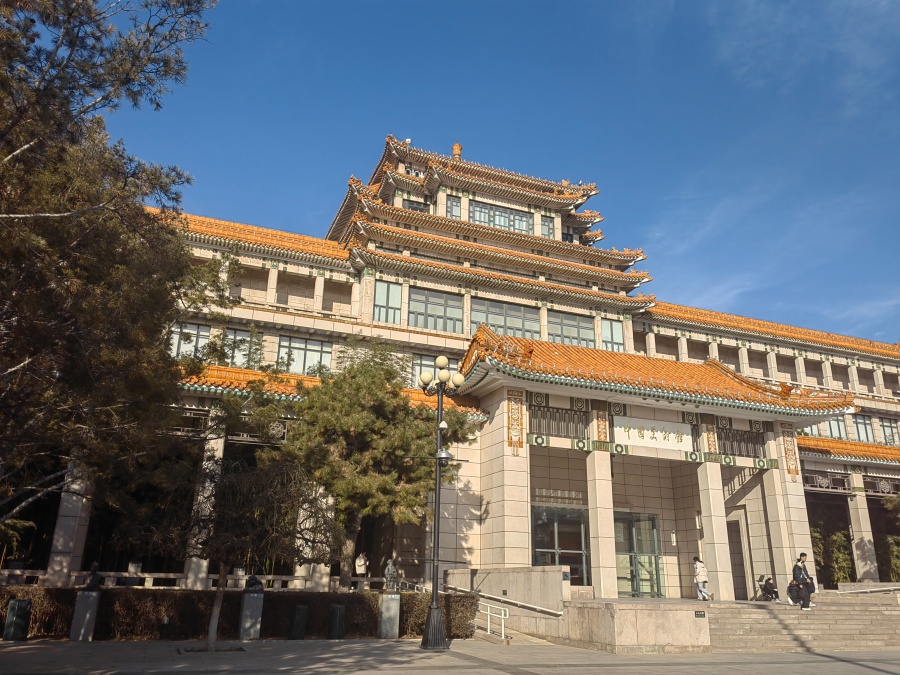
The National Art Museum of China in Beijing, Jan. 13, 2026. [Photo by Liu Sitong/China.org.cn]
One highlight, the "Vivid and Vibrant Auspicious Imagery in Chinese Folk Art" exhibition, displays paintings, sculptures and embroidery. The works feature auspicious symbols representing hopes for harmony, safety, abundant harvests and a better life.
Running through Feb. 1, the exhibits are drawn from the museum's collection of nearly 70,000 folk art works.
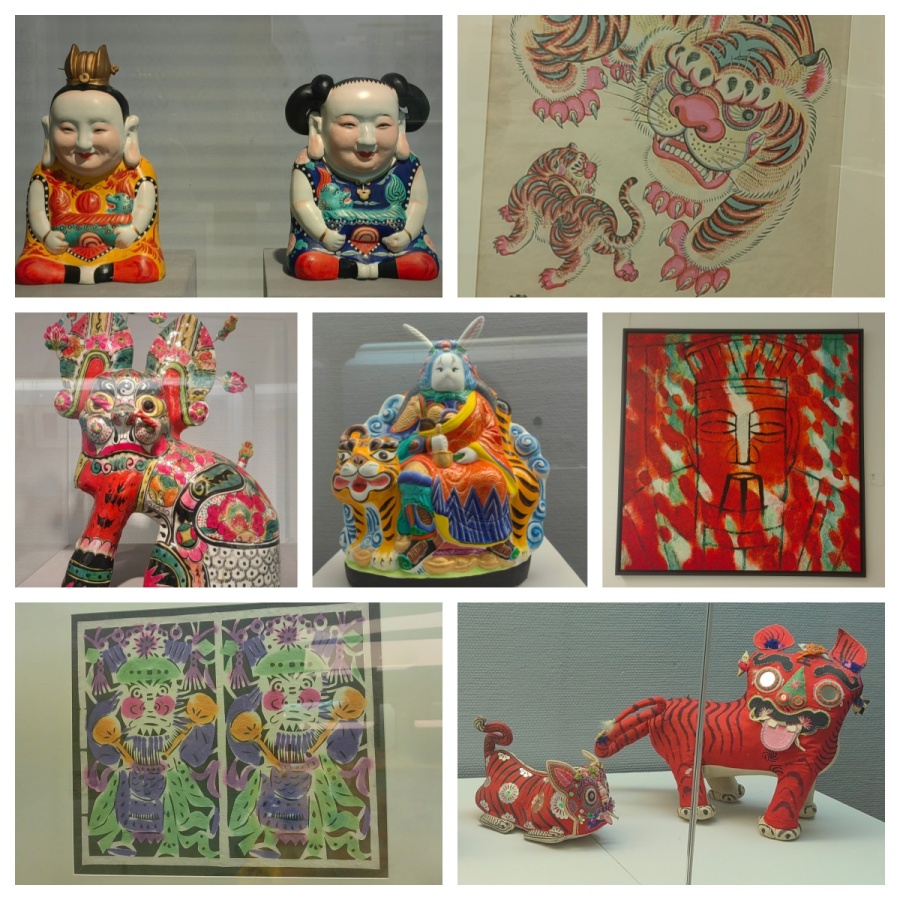
Paintings, sculptures and embroidery representing hopes for harmony, safety and good harvests are displayed at the "Vivid and Vibrant Auspicious Imagery in Chinese Folk Art" exhibition at the National Art Museum of China in Beijing, Jan. 13, 2026. [Photo by Liu Sitong/China.org.cn]
Works by lacquer artist Xue Xiaodong are on display at the museum through Jan. 31 as part of an invitational exhibition series. Xue is a designated inheritor of Pingyao polished lacquer, a craft listed as a national intangible cultural heritage in 2006.
Dating to the Tang dynasty (618-907), the technique produces items that are both functional and artistic, including furniture, tableware, screens and paintings. The production process involves dozens of steps — including lacquering, painting, polishing, inlaying and carving — to create pieces with detailed patterns and a smooth glaze.

Works by Xue Xiaodong, an inheritor of Pingyao polished lacquer art, are displayed at the National Art Museum of China in Beijing, Jan. 13, 2026. [Photo by Liu Sitong/China.org.cn]
Another exhibition in the series features nearly 40 works by Yuan Changjun, a master of filigree inlay, on view through Feb. 2.
Recognized as a national intangible cultural heritage in 2008, the craft is known for its sophisticated techniques and use of precious materials. Thin gold and silver wires are shaped into intricate patterns and inlaid with gemstones and pearls to create jewelry, utensils and sculptures.
Once reserved for the imperial court, the craft is now appreciated by people from all walks of life.
Yuan, who studied under older masters, developed his skills by restoring and replicating hundreds of museum antiques. He also incorporates techniques such as enameling, chasing and carving to balance traditional and contemporary aesthetics.
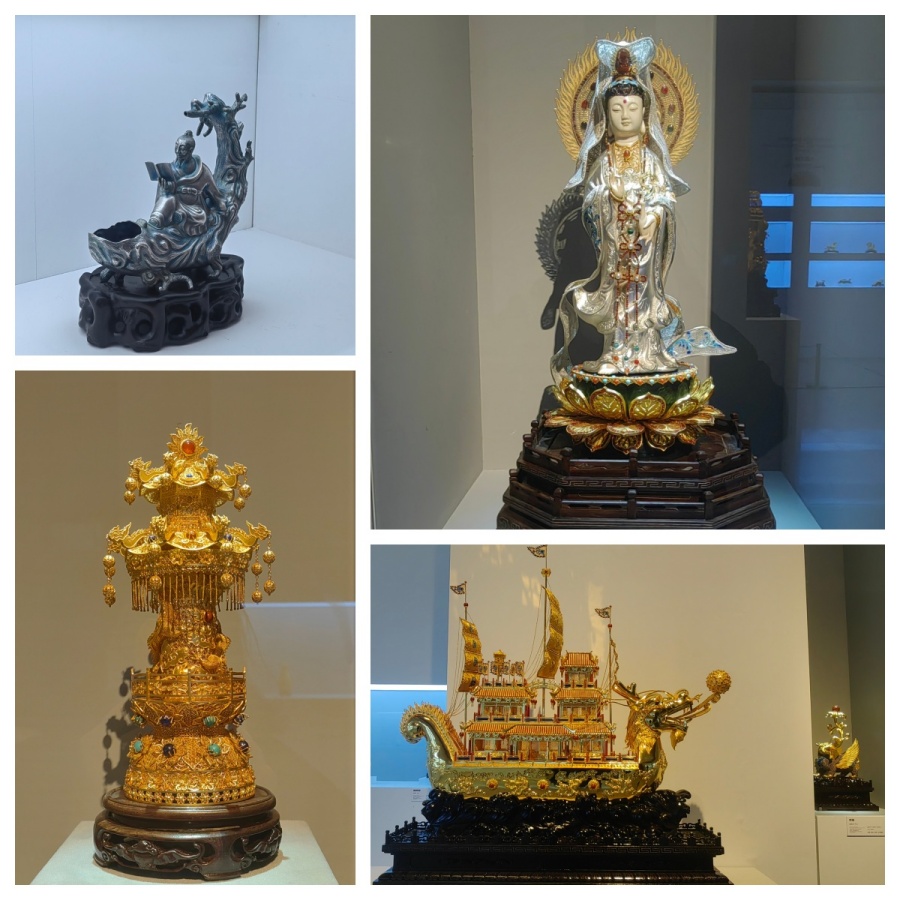
Works by filigree inlay master Yuan Changjun are displayed at the National Art Museum of China in Beijing, Jan. 13, 2026. [Photo by Liu Sitong/China.org.cn]
Also on view at the museum, a painting exhibition traces a century of artistic development in Beijing and Tianjin, featuring nearly 200 works by renowned artists including Qi Baishi, Jin Cheng and Chen Banding. The showcase also presents historical art publications, highlighting works rooted in traditional Chinese culture.
Facing the influence of Western painting styles a century ago, artists in the region sought to preserve traditional aesthetics while remaining open to foreign influences. They established painting societies, published journals and organized charity auctions, cultivating talent across various traditional schools.
The exhibition, which explores how these efforts influenced later generations to uphold Chinese fine art traditions, runs through the end of the month.
It is supported by a private collector who donated more than 30 artworks and extensive historical literature to the museum.
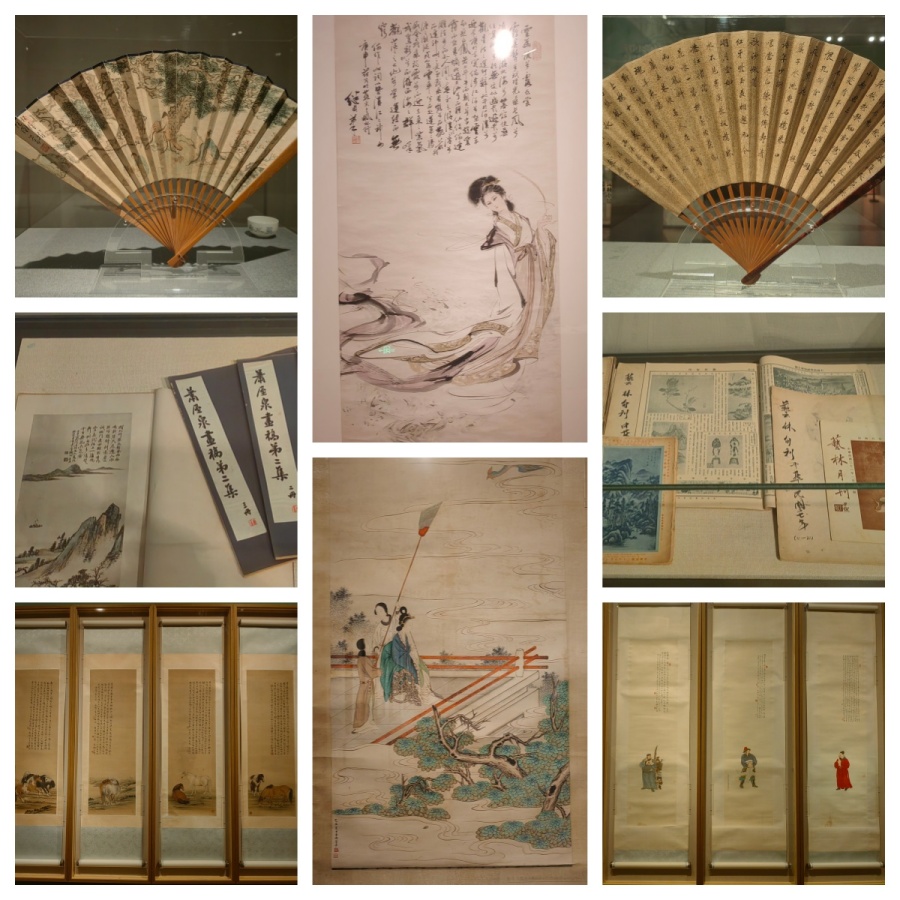
A painting exhibition focusing on 100 years of development in the Beijing and Tianjin art community presents diverse creations deeply rooted in China's traditional culture at the National Art Museum of China in Beijing, Jan. 13, 2026. [Photo by Liu Sitong/China.org.cn]
A separate exhibition, "Future Poetics, Digital Traces and Intended Blank," highlights works by eight contemporary artists using new technologies to expand artistic expression.
Running Jan. 13-30, the exhibition includes digitized traditional landscape paintings, a kinetic sculpture and a visualization of an AI-based climate governance system. The works reinterpret traditional cultural symbols through a modern lens, offering a forward-looking perspective on humanistic themes.
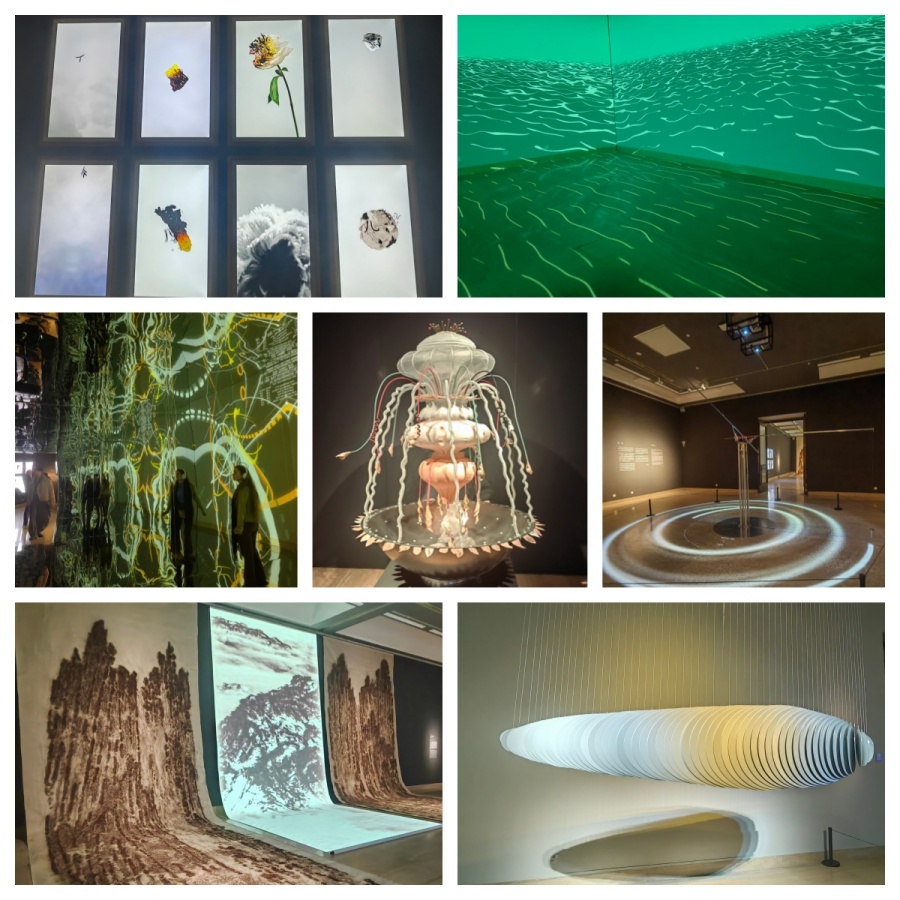
An exhibition showcases works by eight contemporary artists applying new technologies at the National Art Museum of China in Beijing, Jan. 13, 2026. [Photo by Liu Sitong/China.org.cn]
Elsewhere in the museum, an exhibition running through Feb. 1 highlights how traditional crafts are aiding rural development. Dedicated to new folk art, the show is jointly organized by the museum, the Chinese Folk Literature and Art Association and the China Academy of Art.
The exhibition explores how traditional folk crafts, rooted in China's agricultural civilization, form an important part of the country's cultural heritage. It examines how these techniques are being adapted for the internet era, helping folk crafts survive and transform.
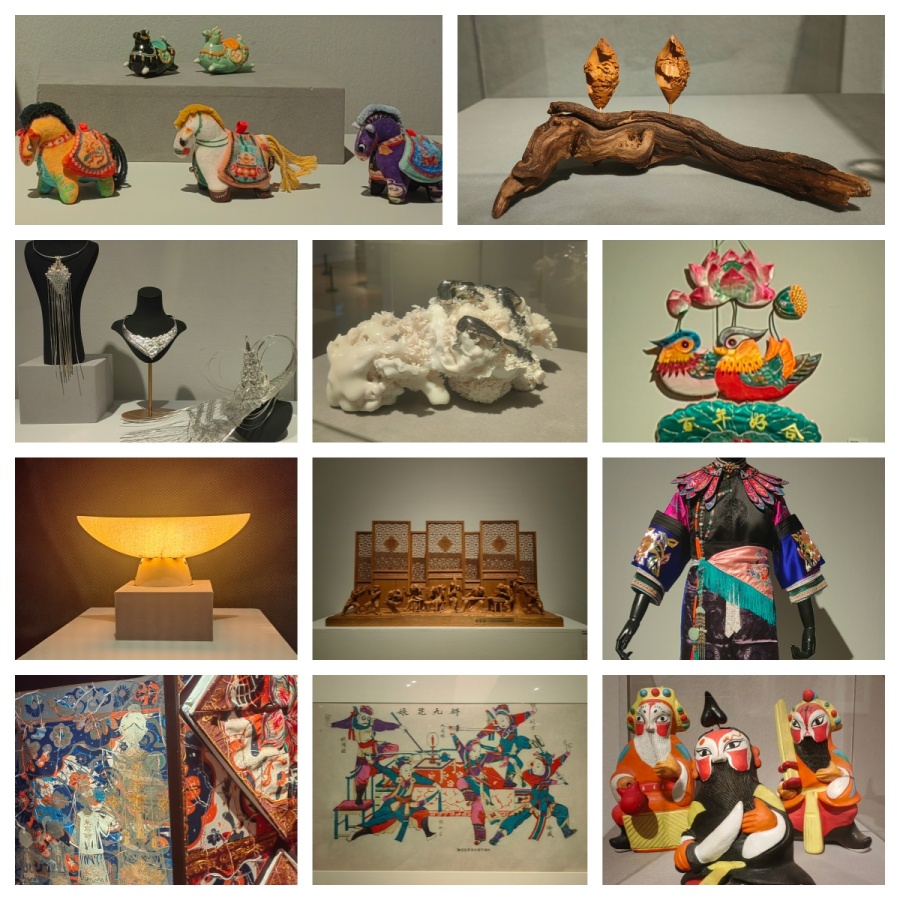
An exhibition highlighting the role of new folk art in rural development is held at the National Art Museum of China in Beijing, Jan. 13, 2026. [Photo by Liu Sitong/China.org.cn]


 京公网安备
11010802027341号
京公网安备
11010802027341号