Share:

Jiaxing city in east China's Zhejiang province is leading rural revitalization through its cultural and creative industries. By promoting local heritage, arts and innovative initiatives, the city is preserving its rich cultural legacy while transforming it into a dynamic economic force.
Renovating old granaries into cultural landmarks
Jiaxing, located south of the Yangtze River and known for its abundant granaries, has repurposed its agricultural heritage into a vibrant cultural landscape.
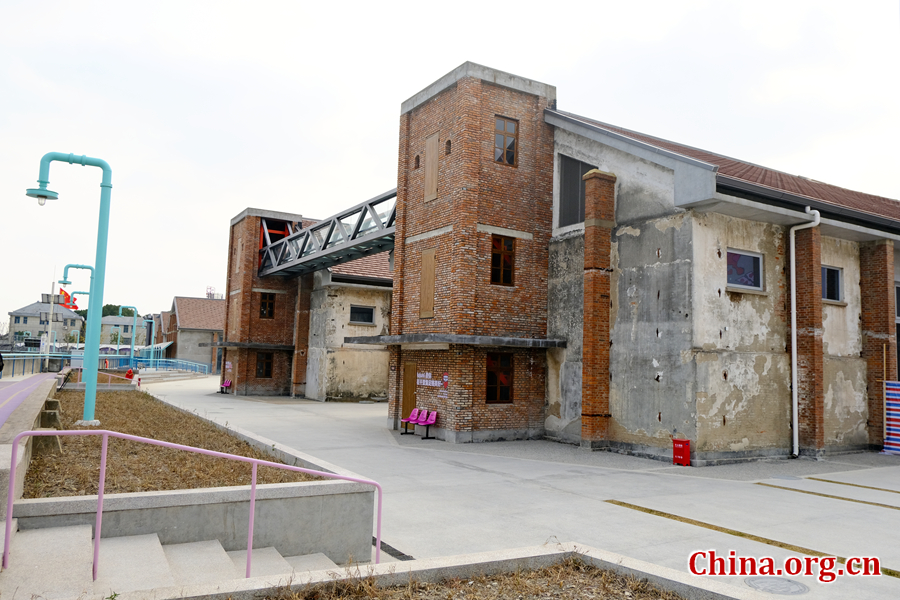
A repurposed granary in Qianliji Creative Cultural Park in Wangjiangjin town, Xiuzhou district, Jiaxing, Zhejiang province, Dec. 2, 2025. [Photo by Chen Xinyan/China.org.cn]
One such example is Qianliji in Wangjiangjin town, Xiuzhou district of Jiaxing, a canal-themed creative cultural park converted from an old grain depot. Featuring 10 renovated grain silos and factory buildings, this new landmark integrates cultural experiences, leisure activities, art exhibitions, interactive technology and fashion elements, in collaboration with international brands like Lamborghini and Bentley. Since its opening during this year's National Day holiday, Qianliji has quickly become a popular cultural tourism destination in the region, attracting over a thousand visitors daily.
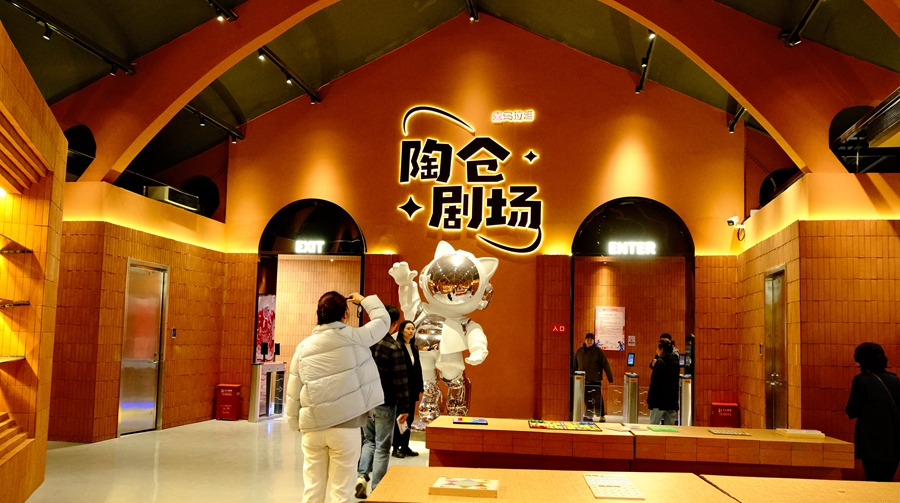
Similarly, Taocang Ideal Village is another remarkable cultural project, also converted from a century-old granary. As a key project of the immersive learning platform Himalaya that integrates audio-based digital economy and cultural tourism, it boosts attractions like Taocang Theater, which offers immersive VR performances, an audiobook library, and more.
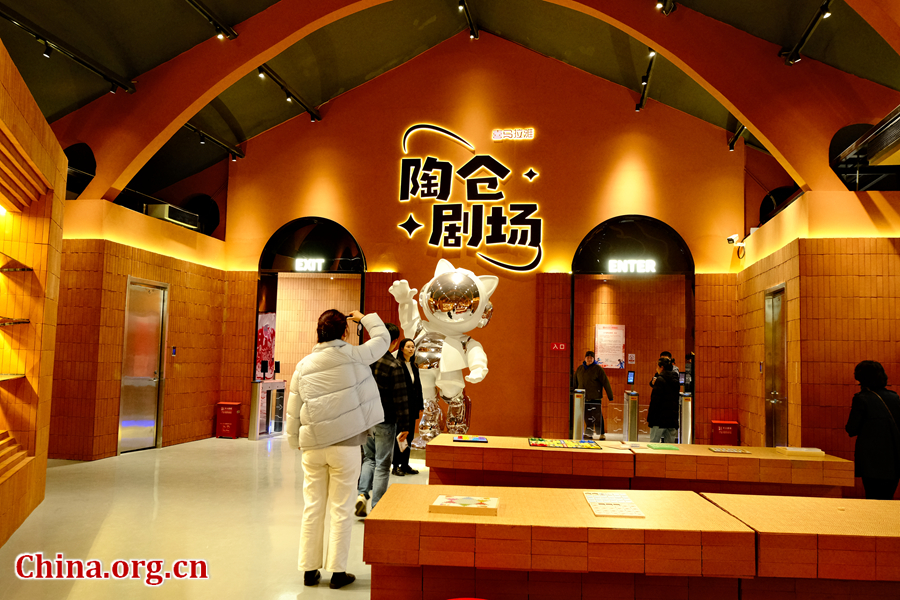
Taocang Theater in Taocang Ideal Village, Xiuzhou district, Jiaxing, Zhejiang province, Dec. 2, 2025. [Photo by Chen Xinyan/China.org.cn]
The project further enhances its visitor experience with a diverse array of facilities, including restaurants, art curation spaces, camping ground and homestays, creating a complete tourism ecosystem for both day trips and overnight visits.
In addition to enriching cultural offerings, the village's focus on hiring local talent contributes to community development. "Our whole team is made up of local hires — our baristas and VR trainers are all recruited, trained and employed right here in the community," said Wang Lequn, operations director of Taocang Ideal Village. "When we need extra help, we sometimes bring in local part-time workers."
Innovating traditional art into merchandise
"I hope this activity encourages villagers to incorporate painting into their daily lives at home. It could help them change their fortunes or lifestyles," said Miao Huixin, a pioneering farmer-artist in Youchegang town, Xiuzhou district of Jiaxing. Characterized by exaggerated forms, vibrant colors and rich connections to water town culture, farmer paintings have become a key cultural symbol in Xiuzhou, enriching the spiritual lives of local farmers.

An exhibition of farmer paintings created by local farmers is held in Youchegang town, Xiuzhou district, Jiaxing, Zhejiang province, Dec. 2, 2025. [Photo by Chen Xinyan/China.org.cn]
In March, a farmer painting class opened in Shengfeng village, attracting 22 students, the vast majority of whom are from the local community.
"I want to show them that painting isn't as hard as it seems. If you put your heart into it, you can do it," Miao said, expressing his hope to involve more local villagers in these activities.
With support from the local government, Xiuzhou is now home to a farmer painting museum, 32 painting bases, and over 2,000 farmer-artists.
"If we can develop more ways to turn their art into merchandise, it could be sold around the world," Miao said.
Stove painting is another folk art form originating in Jiaxing that has evolved from pure artistic expression into high-quality products. Local artists use watercolor and gouache to create various auspicious patterns and text designs on the clay stoves of rural homes, in what has become a distinctive art form typical of the southern Yangtze River region. In 2011, it was listed as a national-level intangible cultural heritage.
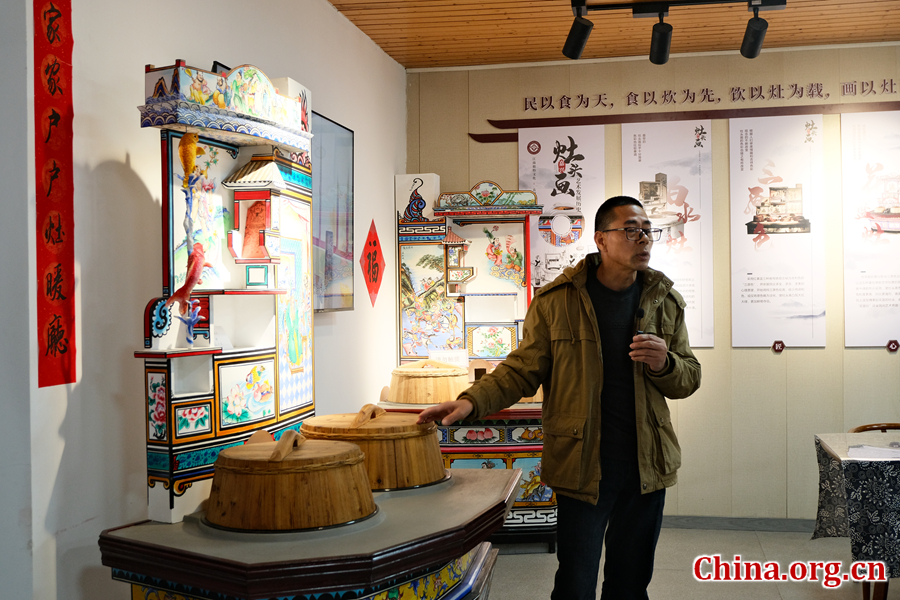
Zhao Shengbo, stove painting artist, introduces his works, Fengyi village, Tongyuan town, Haiyan county, Jiaxing, Zhejiang province, Dec. 5, 2025. [Photo by Chen Xinyan/China.org.cn]
"Our local government cares a lot about our traditional culture and how to innovate and improve it," said Zhao Shengbo, an inheritor of the intangible cultural heritage of stove painting in Zhejiang province. "With their help, I've taken my works to Beijing, Hebei, Anhui, Jiangsu and Shanghai."
Zhao is not only sticking to traditional patterns but also innovating by drawing inspiration from paintings on historic Chinese architecture, such as the Summer Palace and the Temple of Heaven. He's also adding value to his work by creating innovative by-products like fridge magnets.
"Only when your craft and quality are recognized can the price go up," Zhao said.
Expanding global reach of Chinese micro-dramas
Micro-dramas, online literature and games have emerged as China's "new trio" in recent years, sparking a global trend. Jiaxing-based company Jiu Zhou Wen Hua, founded in 2021, is capitalizing on this wave. The company has developed a complete industry chain that includes copyright operations, content creation, co-production and official releases, all aimed at "inspiring the world with Chinese stories and unleashing their global value."
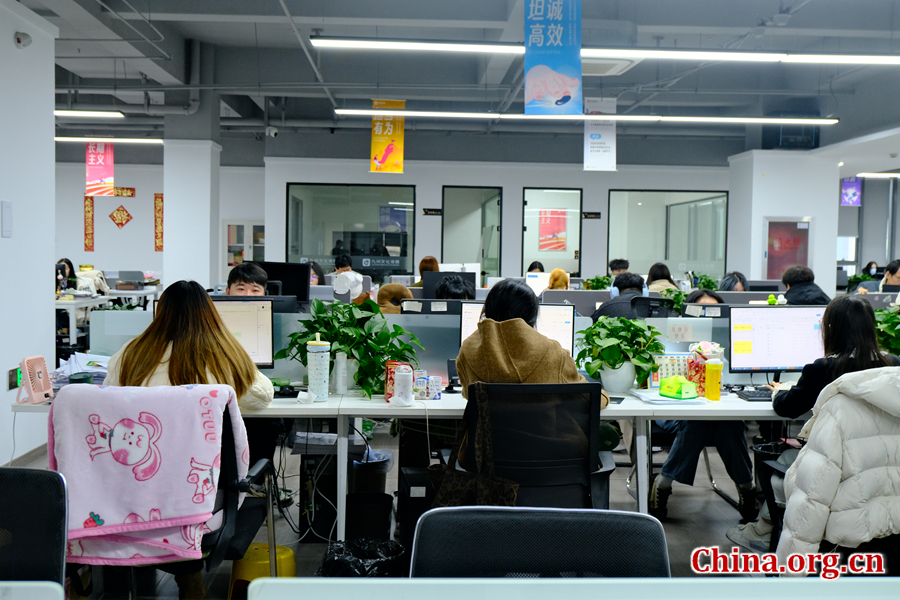
Staff work on film and TV productions at Jiu Zhou Wen Hua's production center in Jiaxing, Zhejiang province, Dec. 3, 2025. [Photo by Chen Xinyan/China.org.cn]
Jiu Zhou Wen Hua collaborates with over 10 screenwriting companies and more than 300 production studios, and even operates its own talent agency. With a team of over 1,000 staff involved in every stage from scripts to post-production, their series have been translated into 15 languages and distributed worldwide through platforms like ShortMax, YouTube, TikTok, Facebook and Instagram, gaining over 10 million followers overseas.
"Chinese culture hasn't really made a significant impact abroad in the past, mainly due to limited channels," said Wang Weizhi, vice president of Jiu Zhou Wen Hua. "But now, the internet is more independent and market-driven. We're working on building new channels to help Chinese stories reach a wider audience."


 京公网安备
11010802027341号
京公网安备
11010802027341号