 Share:

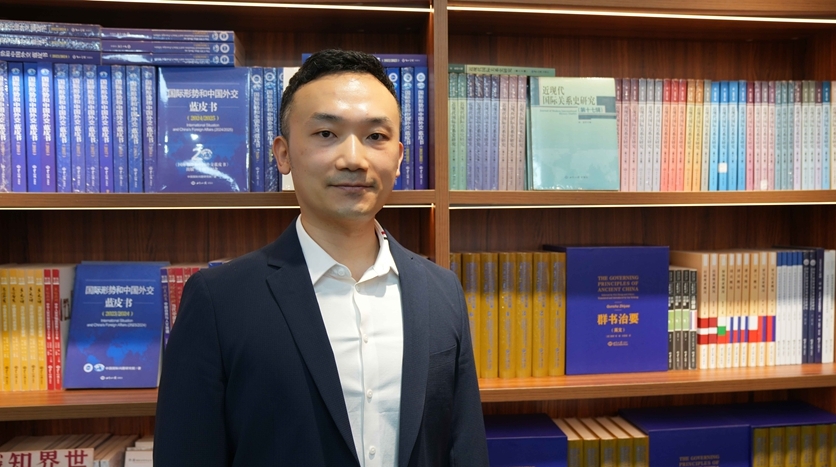
After one year and nine months of painstaking work, Liu Xicheng, an associate professor at the Institute of Education and Humanities , University of Wales Trinity Saint David, has completed the first full English translation of "Qunshu Zhiyao" ("The Governing Principles of Ancient China").
This enduring compendium, originally commissioned by Emperor Taizong of the Tang dynasty (618-907), contains governance principles that guided China's renowned Reign of Zhenguan — a golden age celebrated for its effective governance — and is presented by its translator as a source of potential insights into contemporary global challenges.
In a recent interview, Liu emphasized the text's continued relevance. Noting the classic's coverage of more than two millennia of Chinese history from the legendary Emperor Yao to the Eastern Jin dynasty, he explained, "It reveals both the attributes of prosperity and the causes of crisis. So, it almost lets the readers travel back in time with their current problems and find solutions."
Liu holds a doctorate in finance from the University of Bristol. Reflecting on the 2008 financial crisis, he suggests this event was a profound lesson in how human tendencies like greed, without proper oversight, can lead to systemic failure — a pattern that this classic text is particularly valuable in illuminating.
The translation project itself presented significant challenges. Beyond the text's sheer volume, the final version of which spans six volumes and over one million words, Liu emphasized that the biggest challenge was ensuring he approached the work from the point of view of English-speaking readers. In order to make foundational concepts like filial piety accessible, he supplemented the translation with extensive footnotes and background information.
"So, it is like an encyclopedia of 'Qunshu Zhiyao,'" he explained, aiming to allow readers to fully grasp the nuances without constantly consulting external references.

A set of the six volumes of "The Governing Principles of Ancient China," Nov. 14, 2025. [Photo by Fu Junhua/China.org.cn]
A key takeaway for international readers, according to Liu, is the text's emphasis on concept of people-centered governance. "I think the most important message for our readers is that governance must be centered around the needs of the people," Liu said, drawing directly from the classic's wisdom. He stressed that this imperative transcends any specific political framework.
Liu considers the concept of "oneness" in the text to be particularly relevant for contemporary global governance. He described this as a multidimensional understanding that "a country must see itself as sharing the same fate with other countries." This perspective, he argues, is vital for our interconnected world, as "it breaks down the mental barriers that prevent international collaboration."
As for today's global challenges, Liu distills key prescriptions from the classic, the first being introspection guided by a sense of humility. Citing the Confucian ideal that "those who require much from themselves and little from others will keep themselves from being the object of resentment" (躬自厚而薄责于人,则远怨矣), he highlighted its modern relevance.
He elaborated that an attitude of "looking inward rather than outward" — focusing on self-improvement over imposing one's domestic rules and ideologies — is essential for reducing conflict. This principle, he noted, aligns with China's advocacy for abiding by international law and non-interference. "This is the starting point to reduce international conflict," he said.
Liu further emphasized the need for continued cultural rediscovery worldwide as essential to achieving global harmony. "Each country should search for moral teachings that have been passed down by its own ancestors through the ages," he said. This process, he explained, enables people to "appreciate what is good and what is bad," while developing deeper respect for both their own heritage and others' traditions — a process he sees as fundamental to reducing international confrontations.
Looking ahead, Liu plans to continue teaching and interpreting the book, with courses already launched in the U.K. "The next step is more about the teaching, interpretation and practicing around this masterpiece," he said. He sees a potentially wide audience for the book, noting that "the audience of this work should not be limited to sinologists, but should include anyone with managerial responsibilities."


 京公网安备
11010802027341号
京公网安备
11010802027341号