Share:

At sunrise in South America, as the light pierced the mist of the Iguaçu rainforest and cascaded over the roaring falls, Chinese travel blogger Chen Liwan captured the moment with her camera after journeying nearly 20,000 kilometers.

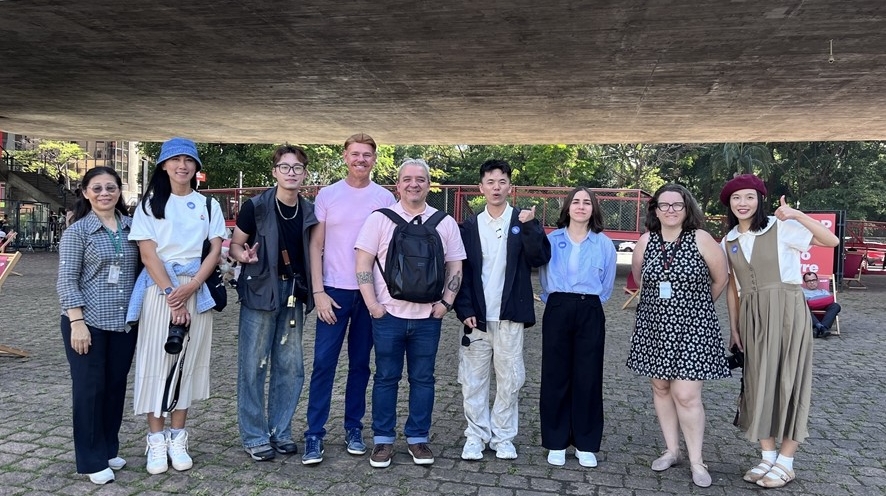
Chinese online influencers participating in the 2025 "Connecting Cultures: Brazil-China" project visit the São Paulo Museum of Art in Brazil, Nov. 11, 2025. [Photo provided to China.org.cn]
The "Connecting Cultures: Brazil-China" project brought Chen and a group of Chinese media and content creators to São Paulo, Foz do Iguaçu, and Rio de Janeiro from Nov. 10 to 18, where they explored Brazil's urban life, natural landscapes, and local culture.
The project, organized by Embratur, Brazil's official tourism promotion agency, with support from the Center for the Americas under China International Communications Group, coincided with the 30th U.N. Climate Change Conference in Belém, Brazil. This created a meaningful overlap: As global leaders discussed climate governance, Chinese participants experienced ecological protection and sustainable tourism firsthand, adding another dimension to China-Brazil exchange and cooperation.
People-to-people bonds: From on-screen impressions to heartfelt encounters
"Upon receiving the invitation, I accepted it. Brazil has always been on my must-visit list," said Chen. Like many in China, her image of Brazil had been defined by samba, football, and the beautiful landscapes seen on screen. But once she arrived, she realized that "the most beautiful part of Brazil is its people."

Travel blogger Chen Liwan (L) poses for a photo with a Brazilian girl at the Itaipu Biological Refuge during the 2025 "Connecting Cultures: Brazil-China" project, Nov. 10-18, 2025. [Photo provided to China.org.cn]
On a cable car at Iguaçu Falls, she met a Brazilian woman in her 60s "dressed in rose with blue mascara, glowing with confidence and joy." Chen complimented her in simple Portuguese she had just learned, sparking a lively exchange of gestures and blown kisses.
Later, a little Brazilian girl snapped a Polaroid of Chen with wildlife and shyly handed it to her. "My heart melted," Chen said, moved by the warmth and hospitality of the locals.
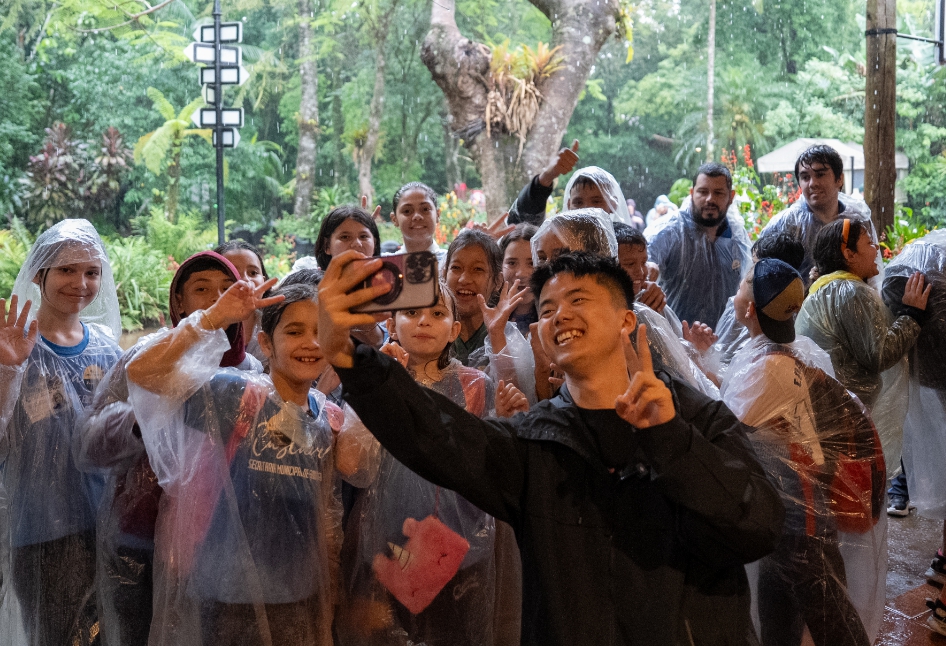
Video blogger Xu Chutao takes a selfie with elementary school students in Foz do Iguaçu, Brazil, during the 2025 "Connecting Cultures: Brazil-China" project, Nov. 10-18, 2025. [Photo provided to China.org.cn]
Video blogger Xu Chutao had similar experiences. Though he initially worried about language barriers, young locals in São Paulo approached him for selfies and social media follows. To Xu, Brazil is a "warm, welcoming place that embraces cultures from all over the world."
Xu, also a calligraphy creator, brought Chinese art paper to share his craft. During an event at the Confucius Institute of Fluminense Federal University, he taught Brazilian students to write the Chinese character 福 ("fortune"). "This thin paper becomes our shared memory," he said.
According to Zhuang Su, deputy director at the Chinese Consulate-General in São Paulo, people-to-people exchanges between the two countries are flourishing. São Paulo alone is home to over 200,000 Chinese residents, and more than 300 Chinese companies operate in Brazil, with over 40 of them Fortune 500 firms. "China's visa-free policy for Brazilians has further boosted cultural interest and understanding," Zhuang added.
Chinese movies and performances are also popular. The movie "Ne Zha 2" sold out theaters, visits from Chinese national arts troupes have drawn enthusiastic audiences, and Chinese film festivals continue to gain traction. With the 2026 China-Brazil Year of Culture approaching, Zhuang expects even closer cultural ties.
Ecological cooperation: From energy synergy to sustainable coexistence
Within Iguaçu National Park, vehicles are limited to a speed of 40 kilometers per hour to protect the local wildlife. Coatis wander freely, and endangered jaguars and giant otters inhabit the surrounding Atlantic Forest. Such small, lively encounters with wildlife speak to a well-protected ecosystem where people and nature coexist.
At the nearby Bird Park in Foz do Iguaçu, more than 1,300 birds of over 130 species thrive. Toucans display bright plumage while macaws call through the rainforest. Beyond tourism, the park has bred 23 endangered bird species in collaboration with Brazil's environmental authorities. Over 200 rehabilitated birds return to the wild each year, and thousands of students receive environmental education there.
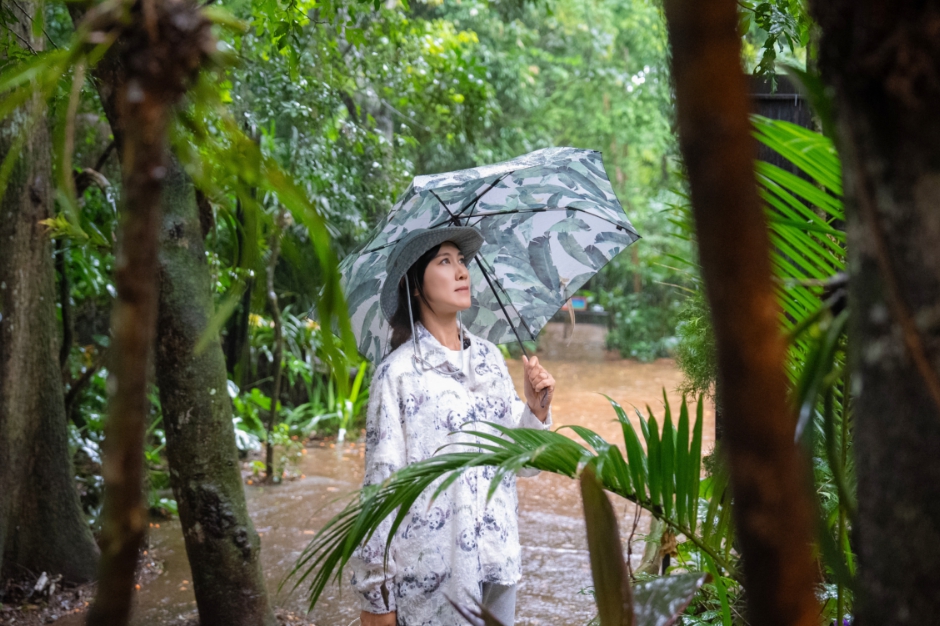
Travel blogger Chang Lin visits the Bird Park in Foz do Iguaçu, Brazil, during her trip as part of the 2025 "Connecting Cultures: Brazil-China" project, Nov. 10-18, 2025. [Photo provided to China.org.cn]
"We don't own nature; we belong to it. We are not to conquer nature, but to live in harmony with it," said travel blogger Chang Lin during her visit.
The Itaipu Dam showcases a deeper model of coexistence. Its "More Than Energy" philosophy integrates power generation with environmental and social programs. Staff member Sergio Angheben explained that large-scale reforestation preserves moisture, prevents pollution, and prolongs the reservoir's life to over 190 years. The dam also supports local waste collectors, educates children, and guides farmers toward sustainable practices.
For more than four decades, Itaipu has maintained close cooperation with China's Three Gorges Dam, moving from one-way learning to mutual exchange on operations and smart management, he said.
For Chang, the journey shifted her perception from tourist admiration to a deeper understanding: She now sees Iguaçu as an ecological hub rather than merely a scenic wonder, and Itaipu as a model of international cooperation for sustainable development.
Brazilian travel blogger Lipe Camanzano recalled visiting Yucun, a village in eastern China's Zhejiang province that transformed from a dusty mining area into an eco-tourism destination attracting over 1 million visitors each year. In his view, both China and Brazil show strong commitment to environmental governance, sustainability, and ecological protection.
Shared future: From pilot project to long-term commitment
Travel and food blogger Wang Jiaqi is already planning another trip. "Street food, the Amazon, small towns — there's so much more worth exploring," he said. Chang agreed that "Brazil isn't a one-time destination." Chen Liwan is also preparing two niche travel routes for her followers.

Travel and food blogger Wang Jiaqi poses for a photo at the São Paulo Museum of Art in Brazil during his trip as part of the 2025 "Connecting Cultures: Brazil-China" project, Nov. 10-18, 2025. [Photo provided to China.org.cn]
Their excitement mirrors Brazil's tourism initiatives. Andre Netto of Embratur recalled knowing little about the Chinese market seven years ago. Today, he uses WeChat regularly and is preparing content for Chinese platforms like Xiaohongshu and Douyin. "We have 600,000 followers on Weibo, but we need localized material. That's why we invited Chinese creators over to our country," he said.
Netto sees the "Connecting Cultures: Brazil-China" project as a major step toward deepening ties with China. As the 2026 China-Brazil Year of Culture approaches, Brazil is planning cultural festivals, community experiences, culinary events, and artistic activities to help Chinese audiences experience its diverse culture more intimately.
At the same time, bilateral cooperation continues to deepen through the Belt and Road Initiative, BRICS, and expanding trade. China remains Brazil's largest export market, and Chinese electric vehicles, brands, and digital payments like Alipay and WeChat Pay are increasingly common in Brazil.
For Xu Chutao, his 10-year Brazilian visa feels like a cherished promise. As the group departed Rio and the Christ the Redeemer statue faded from view, the bonds forged across seas remained firmly rooted in each traveler's heart.


 京公网安备
11010802027341号
京公网安备
11010802027341号